
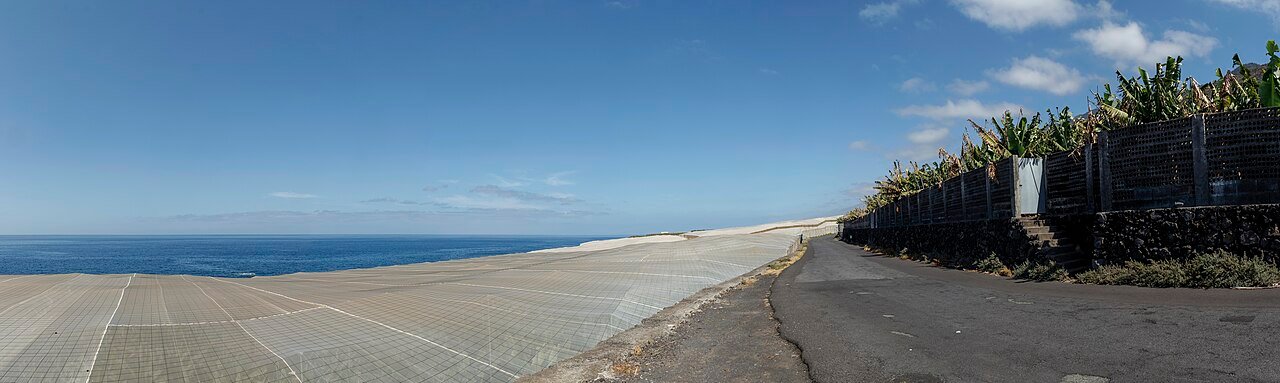
The banana is one of the most surprising plants you can identify, because the first thing you learn is that it is not a tree at all. A banana is a giant herb: its trunk is not wood but a tight roll of leaf stalks, and the whole plant grows, fruits and dies in a single cycle, sending up new shoots from its base. That fact alone makes banana identification interesting, and the plant's huge leaves and hanging fruit make it unmistakable.
This guide explains the leaves, the false trunk, the flower and the fruit of the banana plant, how it grows, and how to tell it apart from the few plants that look similar.
Banana Plant Features to Check
The leaves are the fastest clue. Banana leaves are enormous — often 2 to 3 metres long and half a metre wide — smooth, bright green, with a strong central rib and parallel side veins. They tear easily in the wind, so older leaves often look shredded along the edges, which is normal and not a sign of disease. The leaves grow from the top of the false trunk in a spiral, unfurling like a rolled scroll.
The false trunk, called a pseudostem, is the second feature. It is made of tightly overlapping leaf stalks, not wood, and it is soft enough to cut with a knife. It is usually green, sometimes flushed with purple or red, and it can reach 3 to 7 metres tall. Because it is not wood, a banana has no bark, no branches and no growth rings — and that absence is itself a clue.
The flower and fruit are the third feature. A banana produces a large hanging flower spike with a purple bud at the end, and the fruit grows in hands along the spike, curving upwards as it develops. A single bunch can hold a hundred or more bananas, green at first and turning yellow as they ripen. Each plant fruits once, then dies back, while new shoots grow from the base to take its place.
How to Identify It Step by Step
- Look at the leaves: huge, smooth, bright green, 2 to 3 metres long, with a strong central rib and parallel veins, often torn along the edges.
- Check the trunk: a soft pseudostem of overlapping leaf stalks, not wood, with no bark and no branches.
- Look for the flower: a large hanging spike with a purple bud, and hands of fruit curving upwards along it.
- Check the fruit: long, curved, green turning yellow, growing in hands on a single large bunch.
- Upload a leaf or whole-plant photo to the Plant Identifier to confirm, and compare the leaf size with the description above.
Banana Varieties You May Meet
- Cavendish: the common supermarket banana, with large yellow fruit, a tall plant and a heavy bunch.
- Lady Finger: a smaller, sweeter banana on a shorter plant, popular in home gardens.
- Red banana: reddish-purple skin, sweet flesh with a slight raspberry flavour, and a shorter, sturdier plant.
- Plantain: a larger, firmer banana grown for cooking, with green skin that turns yellow-black when ripe.
- Dwarf Cavendish: a compact variety, 2 to 3 metres tall, grown in pots and small gardens.
Common Mistakes to Avoid
- Calling a banana a tree. It is a giant herb with a pseudostem, not a woody trunk, and that matters for how you care for it.
- Confusing banana with bird of paradise or traveller's palm. Those have similar large leaves but grow from a woody base and produce different flowers.
- Worrying about torn leaves. Banana leaves tear naturally in the wind, and shredded edges are normal, not a disease.
- Expecting the plant to live for years. Each banana stem fruits once and then dies, while new shoots take over — that is the normal cycle.
Growing Bananas
Bananas need warmth, sun, rich soil and plenty of water. They grow fastest in temperatures above 25 degrees, and they stop growing below 15 degrees, so in cool climates they are grown in greenhouses or as summer plants. Feed them well, water them often, and protect them from wind, which shreds the leaves and can snap the soft pseudostem.
A banana plant can produce its first bunch within a year in a warm climate, which makes it one of the fastest fruiting plants you can grow. After the fruit is harvested, cut the old stem down to the ground and let a new shoot take its place — the cycle begins again.
Frequently Asked Questions
How do I identify a banana plant?
Look for huge smooth leaves, a soft pseudostem made of leaf stalks instead of wood, a hanging purple flower spike, and hands of fruit curving upwards.
Is a banana a tree?
No. A banana is a giant herb. Its trunk is a pseudostem of overlapping leaf stalks, not wood, and each stem fruits once and then dies.
What is the scientific name of the banana plant?
Musa acuminata and Musa balbisiana are the main parent species of most edible bananas, which are hybrids of the two.
How tall does a banana plant grow?
Usually 3 to 7 metres tall, depending on the variety. Dwarf varieties stay at 2 to 3 metres.
Try it yourself: upload a photo to the Plant Identifier and see the identification with full details on this site. Read also: Palm Tree Identification Guide.
The banana plant is easy to know once you look closely: huge soft leaves, a trunk that is not wood, a purple flower spike and hands of fruit curving upwards. Learn those features and the surprising fact that it is a herb, not a tree, and you will never mistake a banana for anything else again.