
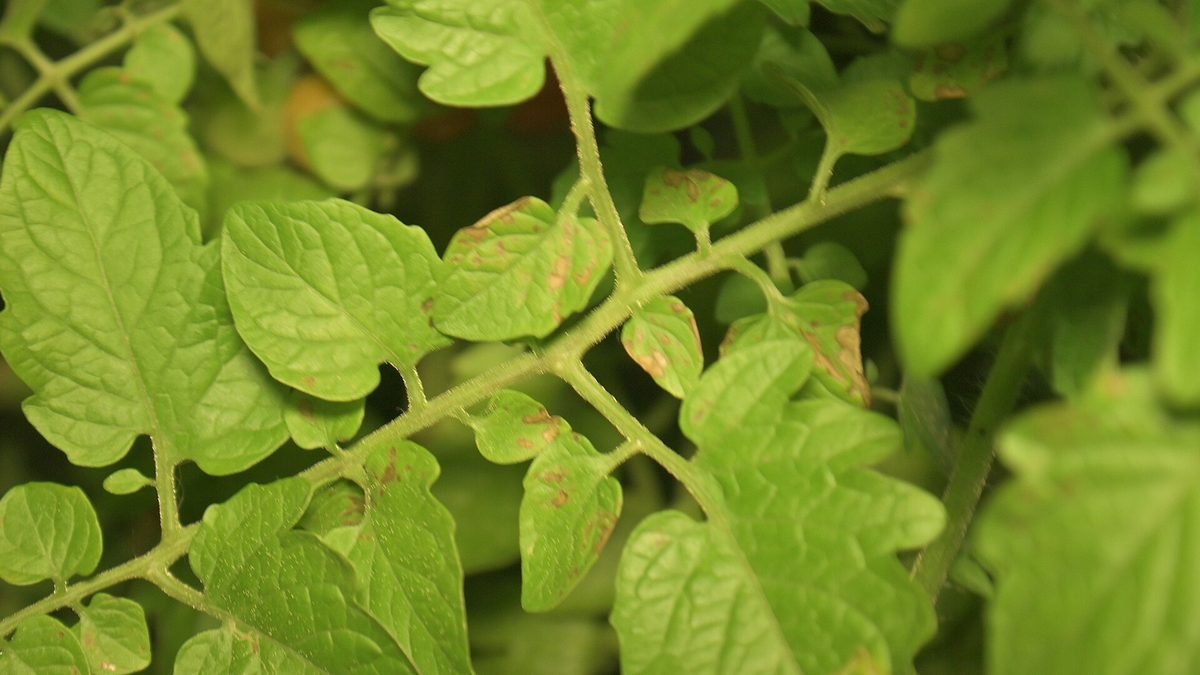
Dark spots on leaves are one of the most common plant problems, and one of the least understood. They appear in summer, spread across the leaves, and make a healthy plant look sick, yet most leaf spot diseases do little real harm. A tree with spotted leaves still makes food, still grows, and usually comes back perfectly healthy the next spring.
That does not mean leaf spots should be ignored. Some spread fast, some weaken young plants, and a few signal a more serious disease. This guide explains how to tell leaf spots apart, what to do about them, and how to stop them coming back year after year.
What Leaf Spots Look Like
Fungal leaf spots usually appear as round or irregular blotches, brown or black with a darker edge and sometimes a pale centre. They often start on the lower leaves, where rain splashes spores upward from the soil, and they spread after wet weather. Anthracnose makes larger sunken blotches along veins, while tar spot makes raised black spots that look like drops of tar on maple leaves.
Bacterial leaf spots look different. They are often angular, limited by the leaf veins, and they may have a yellow halo or a water-soaked look when fresh. Bacterial spots spread in warm wet weather and through wounds, and they are harder to treat than fungal spots, because most garden sprays do not touch bacteria.
Not every spot is a disease. Sun scorch makes pale papery patches, wind damage tears leaf edges, and nutrient shortage causes yellowing between veins that can look like spots from a distance. Check the pattern: diseases usually start on older or lower leaves and spread over days, while sun and wind damage appear suddenly after a hot or stormy day.
How to Identify It Step by Step
- Look closely at the spots: their shape, colour, edge and whether they have a pale centre or a yellow halo.
- Check where they started. Spots beginning on lower leaves after rain usually mean a fungal disease spread by splash.
- Remove badly spotted leaves, put them in the bin, and never compost diseased material.
- Improve air flow by pruning crowded branches, and water the soil rather than the leaves.
- Clear fallen leaves in autumn, because spores survive winter in leaf litter and reinfect the tree in spring.
Common Leaf Spot Diseases
- Anthracnose: Large dark blotches along veins and leaf edges, common on sycamore, ash and plane trees after wet springs.
- Tar spot: Raised black spots on maple leaves that look like tar drops. Ugly but harmless to the tree.
- Bacterial spot: Angular spots with yellow halos, spread by rain and wounds, common on fruit trees and tomatoes.
- Cercospora leaf spot: Small round spots with pale centres, common on many garden plants in warm humid weather.
- Shot hole: Small round holes where the dead centres of spots have fallen out, common on cherry and plum leaves.
Common Mistakes to Avoid
- Spraying at the first spot. Most leaf spots need no spray at all, and garden fungicides rarely cure leaves that are already spotted.
- Composting diseased leaves. Spores survive home composting, so diseased leaves belong in the bin, not the heap.
- Watering from above. Wet leaves invite fungi, so water the soil in the morning and let leaves dry quickly.
- Planting too closely. Crowded plants stay damp, and damp leaves are where leaf spot diseases start.
Stopping Leaf Spots Next Year
The best treatment for leaf spot is autumn hygiene. When the leaves fall, clear them up and bin them, because the spores spend winter in the litter and splash back onto the new leaves in spring. Prune the tree in winter to open the crown, so air moves through and leaves dry fast after rain, and mulch the soil to stop rain splashing spores upward.
If the same tree is badly spotted every year, consider its position. A tree in a damp, shady corner will always struggle, while the same species in sun and moving air stays clean. Sometimes the kindest treatment is to improve the site, or to replace a badly affected tree with a resistant variety that suits your garden better.
Most leaf spot diseases are worst in wet weather, and that gives you a simple way to reduce them. Water at the base of the plant, never over the leaves, and water in the morning so any splashes dry quickly in the sun. Space plants so air can move between them, and prune dense growth to let light and air into the crown. In autumn, rake up and remove fallen leaves, because many leaf spot fungi spend the winter in leaf litter and return to the tree in spring. A clean garden in winter is a healthier garden in summer.
Frequently Asked Questions
Are leaf spots dangerous for trees?
Usually not. Most leaf spots only spoil the look of the leaves, and the tree recovers fully the next spring.
How do I treat leaf spot disease?
Remove affected leaves, bin them, improve air flow, water the soil not the leaves, and clear fallen leaves in autumn.
Can leaf spot spread to other plants?
Yes, spores travel on wind and rain, so clear diseased leaves promptly and avoid crowding plants together.
Should I spray fungicide for leaf spots?
Rarely. Most garden leaf spots need no spray, and fungicides cannot cure leaves that are already spotted.
Try it yourself: upload a photo to the Plant Disease Identifier and see the identification with full details on this site. Read also: Tree Fungal Diseases: Identification Guide.
Leaf spots look alarming but are usually harmless, and the cure is simple garden care: remove spotted leaves, bin them, give the plant air and light, water the soil, and clear the autumn leaves. Do that, and next year's leaves will be clean.