
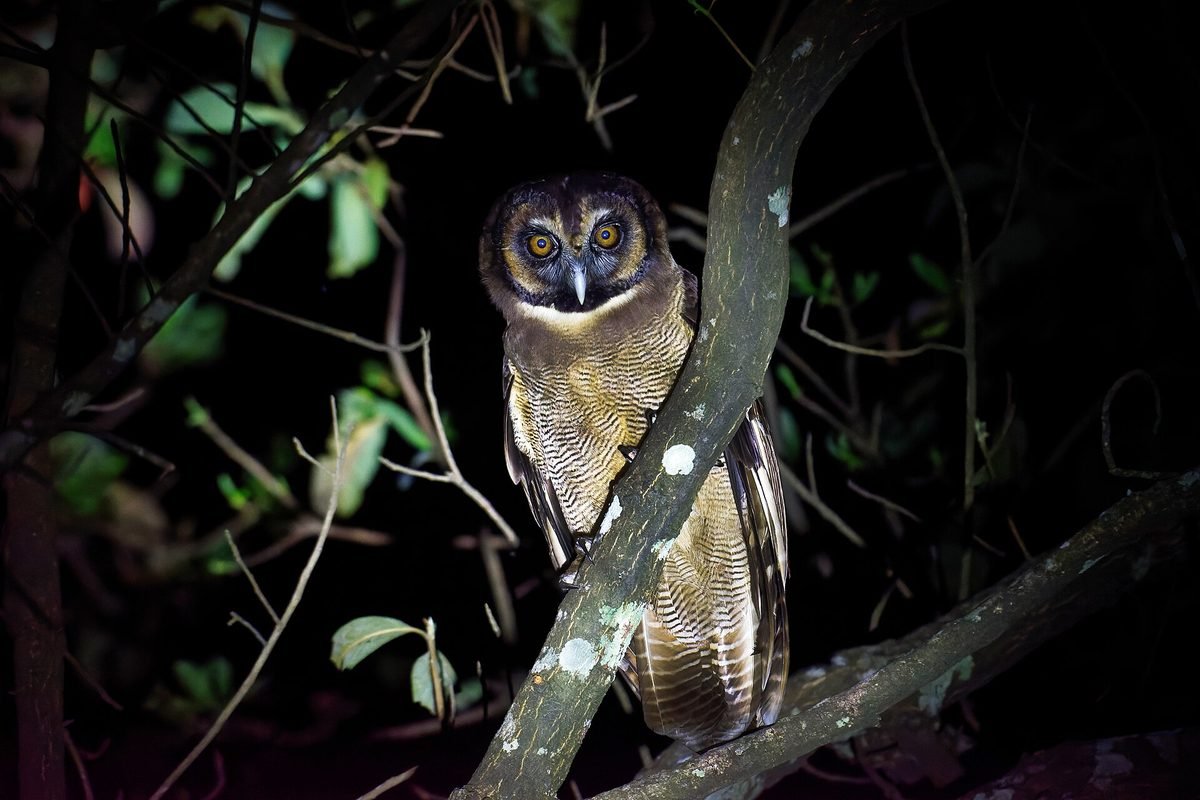
When the sun goes down, a second world wakes up. Owls hunt silently overhead, bats flicker through the dusk, moths crowd around flowers, and hedgehogs snuffle through the leaves. Most people never see this world, because they go indoors at dark, but it is there every night, even in the middle of a town.
Watching nocturnal wildlife needs a different approach from daytime watching. You need darkness, quiet and patience, and you need to use your ears as much as your eyes. This guide explains who comes out at night, how to find them, and how to watch without disturbing them.
Who Comes Out at Night
Owls are the most famous night hunters. A tawny owl calls with its familiar hoot, a barn owl screeches as it quarters fields, and a little owl bobs on a fence post at dusk. Owls hear a mouse moving under grass in total darkness, and their soft feathers let them fly without a sound. Listen for their calls in autumn and winter, when they are loudest.
Bats are the night's most surprising animals. A pipistrelle weighs less than a coin, yet it can eat thousands of insects in a single night, catching them on the wing with sound. Watch for bats at dusk near water, street lights and garden ponds, where insects gather, and listen with a bat detector if you can borrow one, because most bat calls are too high for human ears.
Moths, hedgehogs and foxes complete the night shift. Moths pollinate night-scented flowers such as honeysuckle and evening primrose, hedgehogs hunt slugs and beetles in gardens after dark, and foxes patrol their territories through the night. Even the trees change at night, as their leaves close, their flowers release scent, and the whole woodland fills with sounds you never hear by day.
How to Identify It Step by Step
- Pick a calm, dry evening and arrive before dark, so your eyes adjust and the animals get used to you.
- Stand still and quiet near a hedge, a pond or a woodland edge, and listen for calls, rustles and wingbeats.
- Watch the sky at dusk for bats, and listen for owl calls after dark, especially in autumn and winter.
- Use a red torch, not a white one, so you can see without blinding the animals or ruining your own night vision.
- Stay for at least thirty minutes, keep your voice low, and leave the way you came without chasing anything you see.
Night Wildlife You May Meet
- Tawny owl: The commonest owl, hooting from woodland trees on autumn nights, with a round head and dark eyes.
- Pipistrelle bat: A tiny bat that flickers around street lights and ponds at dusk, catching insects on the wing.
- Hedgehog: A snuffling visitor to gardens after dark, eating slugs and beetles, and hibernating through winter.
- Red fox: A bold night hunter that patrols gardens and fields, with a sharp bark and a bushy tail.
- Elephant hawk-moth: A large pink and olive moth that visits honeysuckle at dusk, with a caterpillar like a tiny elephant trunk.
Common Mistakes to Avoid
- Using a bright white torch. White light blinds animals and ruins your night vision. Use a dim red torch instead.
- Making noise. Talking, crunching leaves and moving about will send night wildlife away before you see it.
- Expecting to see everything at once. Night watching needs patience, and some nights you will see almost nothing.
- Disturbing nests and roosts. Never shine a light into a nest box or a bat roost, and never handle wild animals.
Listening to the Night
At night, your ears matter more than your eyes. Learn the calls of the tawny owl, the screech of the barn owl, and the bark of the fox, and you will know what is out there even when you cannot see it. Bats can be heard with a detector, moths can be found by torchlight on flowers, and the rustle of a hedgehog in dry leaves is unmistakable once you have heard it.
Keep a simple notebook of what you hear and see, with the date, the weather and the moon. Over a year, you will build a picture of your local night wildlife, and you will start to predict when the owls will call, when the bats will appear, and when the first moths of spring will arrive. Night nature rewards patience like nothing else in the wild world.
Night watching rewards patience more than any other kind of nature watching. Some nights you will see almost nothing, and then a fox will cross the path, or an owl will call from the trees, and the whole night becomes worth it. Keep a notebook of what you hear and see, with the time and the weather, and over the weeks a pattern will appear. You will learn which animals visit your garden, and when, and that knowledge makes every night walk richer.
Frequently Asked Questions
What is the best time to watch nocturnal wildlife?
Dusk is best for bats, and the first hours after dark are best for owls, hedgehogs and foxes.
Do I need special equipment?
No. A red torch, warm clothes and patience are enough. A bat detector is a useful extra if you can borrow one.
Is it safe to watch wildlife at night?
Yes, if you stay on paths, go with someone, carry a phone, and tell someone where you are going.
Why do I hear owls more in autumn?
Autumn is when young owls leave home and adults call to claim territories, so their calls are loudest then.
Try it yourself: upload a photo to the Tree Identifier and see the identification with full details on this site. Read also: Owls Identification Guide: Night Birds.
Night nature is a whole world most people never see. Go out at dusk, stand still, listen more than you look, and use a dim red light, and the owls, bats and hedgehogs will soon show you that the wild world never really sleeps.