
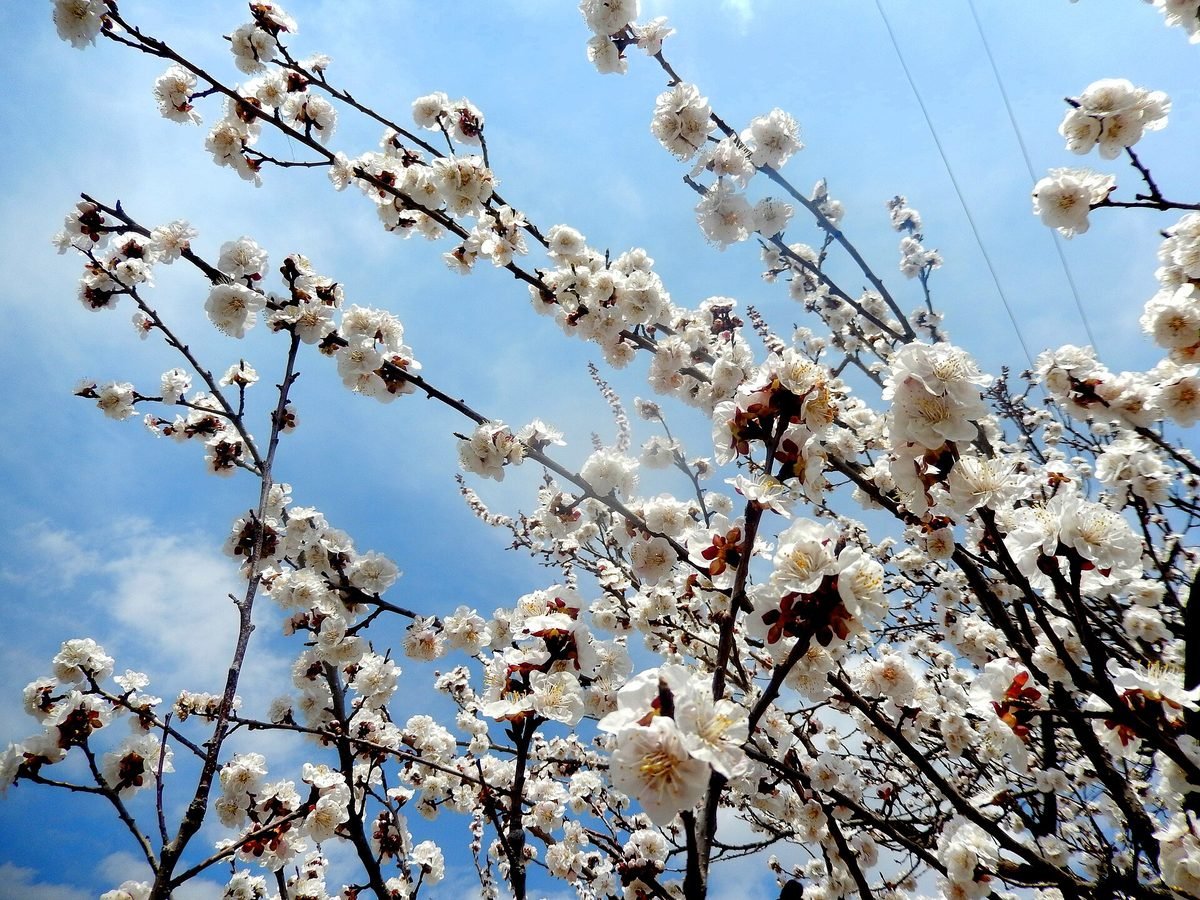
The apricot tree is at its most beautiful in early spring, when its bare branches fill with white or pale pink blossom before the leaves open. For a few weeks it is one of the easiest trees to spot, and in summer its soft orange fruit makes it just as easy. In winter, when it stands bare, the bark and the shape of the branches are the clues to use.
This guide explains the blossom, leaves, bark and fruit of the apricot tree, Prunus armeniaca, and how to tell it apart from plum, peach and cherry, which are close relatives. Work through the features in order, and use the season to your advantage, because each season shows a different apricot clue.
Apricot Tree Features to Check
Start with the blossom, which appears in early spring before the leaves. Apricot flowers are white or pale pink, about 2 to 3 centimetres across, with five rounded petals and a soft sweet scent. They grow singly or in small clusters along the bare branches, and they open very early, sometimes before the last frost. That early flowering is itself a clue, because apricot is usually one of the first fruit trees to bloom in spring.
The leaves are the second feature, and they appear just after the blossom fades. Apricot leaves are broad, simple and heart-shaped, usually 5 to 9 centimetres long, with a pointed tip and a finely toothed margin. They are bright green and slightly glossy above, paler below, and they often have a reddish tint when young. In autumn they turn yellow or orange before they fall, which makes an apricot tree easy to spot in the autumn garden too.
The bark and fruit are the third feature. The bark is reddish-brown to dark grey, fairly smooth on young branches and becoming rougher and cracked on an older trunk. The tree usually grows 4 to 8 metres tall, with a broad rounded crown. The fruit ripens in early to mid summer: round or slightly oval, 3 to 5 centimetres across, with soft velvety skin in shades of orange and yellow, often flushed with red on the sunny side, and a single smooth stone inside.
How to Identify It Step by Step
- Look for the blossom in early spring: white or pale pink five-petalled flowers on bare branches, opening before the leaves.
- Check the leaves in late spring: broad, heart-shaped, 5 to 9 centimetres long, with a pointed tip and a finely toothed margin.
- Look at the bark and shape: reddish-brown bark, a broad rounded crown, and a tree usually 4 to 8 metres tall.
- Check the fruit in summer: soft, velvety, orange-yellow fruit, 3 to 5 centimetres across, often flushed red, with one smooth stone inside.
- Photograph the blossom, a leaf and a fruit, then upload the photos to the Fruit Identifier and compare the result with the leaf shape and fruit size before you decide.
Apricot Varieties and Close Relatives
- Moorpark: a classic variety with large, sweet, deep orange fruit and a spreading tree that fruits reliably in warm climates.
- Tilton: a variety with firm, sweet-tart fruit, often grown for drying, with a vigorous upright tree.
- Goldcot: a hardy variety with medium orange fruit and good cold tolerance, popular in cooler regions.
- Peach: has longer, narrower leaves and larger, fuzzier fruit, and its blossom is usually deeper pink than apricot.
- Plum: has smaller, narrower leaves and smooth-skinned fruit, while apricot fruit is velvety and its leaves are broader and heart-shaped.
Common Mistakes to Avoid
- Confusing apricot blossom with plum or cherry blossom. Check the leaves that follow: apricot leaves are broad and heart-shaped, while plum leaves are narrower.
- Identifying from the fruit alone, when unripe apricots are green and hard, and ripe fruit colour varies from yellow to deep orange.
- Expecting the tree to flower in late spring. Apricot is an early bloomer, so a tree in full flower in early spring is more likely apricot than peach.
- Assuming the fruit is safe to eat because it looks like a shop-bought apricot. Never eat wild fruit based on identification alone; confirm with a local expert first.
Apricot Through the Seasons
An apricot tree tells the year in four clear acts. In early spring the bare branches fill with white or pink blossom. In late spring the blossom gives way to fresh green leaves and small green fruit. In summer the fruit swells, softens and turns orange, and the tree is at its most generous. In autumn the leaves turn yellow and orange before they fall, and in winter the bare branches show the reddish bark and the rounded crown. Learning these four acts means you can identify an apricot in any month.
Apricot is native to Central Asia, where it has been grown for thousands of years, and it is still a vital fruit tree in the mountains of Pakistan and northern India. Its early blossom makes it vulnerable to late frost, so gardeners in cold areas plant it in a sheltered spot. That early flowering, and the soft orange fruit that follows it, are the two features most people remember.
Frequently Asked Questions
How do I identify an apricot tree without fruit?
Use the early spring blossom on bare branches, then the broad heart-shaped leaves with a pointed tip and a finely toothed margin, plus the reddish-brown bark.
What is the scientific name of the apricot tree?
Prunus armeniaca. It belongs to the rose family, Rosaceae, and is native to Central Asia.
When does an apricot tree flower?
In early spring, before the leaves open. It is usually one of the first fruit trees to bloom, and the flowers are white or pale pink.
How tall does an apricot tree grow?
Usually 4 to 8 metres tall, with a broad rounded crown, though the size depends on the variety and how it is pruned.
Try it yourself: upload a photo to the Fruit Identifier and see the identification with full details on this site. Read also: Identify a Tree by Its Flowers.
The apricot tree gives you a clear clue in every season: early white or pink blossom in spring, broad heart-shaped leaves in summer, soft orange fruit with a single stone, and reddish bark in winter. Learn those features, compare them with plum and peach, and confirm with a second feature before you decide. Once you have seen an apricot in full blossom, you will recognise it again the next spring without thinking.