
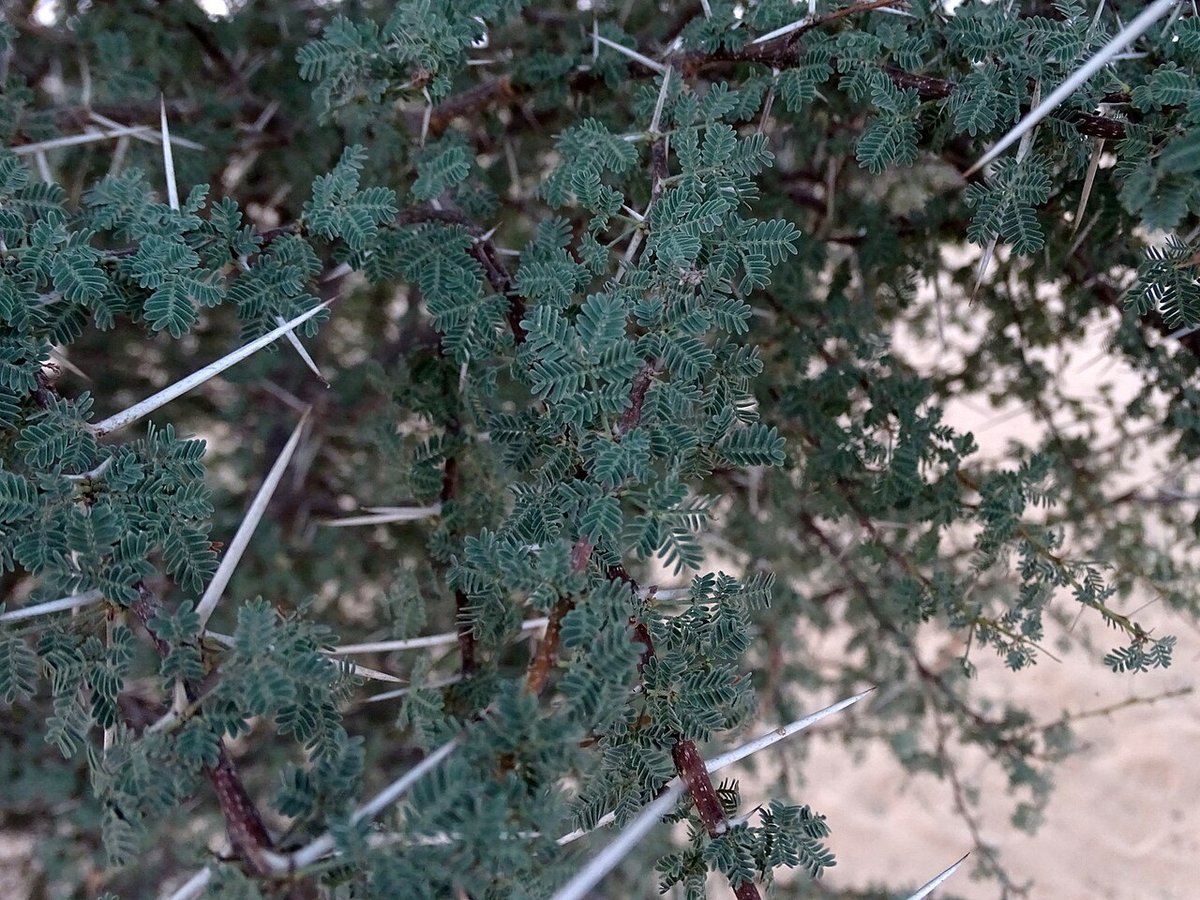
A desert looks like the last place a tree could live. The sun is fierce, the rain is rare and unreliable, and the soil is thin, sandy or salty. Yet deserts have their own trees, and some of them, like the acacias of Africa and the mesquites of the Americas, are among the toughest trees on Earth. They survive not by fighting the desert but by working with it, using every drop of water with remarkable efficiency.
Desert trees are easy to admire and fascinating to identify. The flat-topped umbrella thorn acacia is the classic image of the African savanna, and the mesquite, with its twisted branches and feathery leaves, is a symbol of the dry lands of the Americas. This guide explains how these trees find water, save water and time their growth to the rains, and how to recognise them when you meet them.
Finding Water: Deep Roots and Wide Roots
The first problem for a desert tree is finding water, and the answer is roots. Many desert trees grow roots far deeper than the tree is tall, reaching down to groundwater that lies well below the dry surface. Others spread their roots widely just beneath the surface, so they can catch every drop of rain before it evaporates. Acacias are famous for their deep roots, which let them reach water that shallow-rooted plants cannot touch, so an acacia can stay green in the dry season when the grass around it has turned brown. Mesquites also grow deep roots. A desert tree is often much bigger underground than it looks above ground, and that hidden half is the secret of its survival.
Saving Water: Small Leaves and Clever Timing
Finding water is only half the battle; a desert tree must also avoid losing it. The leaves of acacias and mesquites are small and feathery, divided into many tiny leaflets, which lose less water than a large, broad leaf and catch less heat from the sun. Many desert trees also close their leaflets in the hottest part of the day, folding them away to cut water loss still further. Timing matters as much as shape: desert trees often grow, flower and set seed quickly after rain, then slow down or drop their leaves during long dry spells. Thorns protect the precious leaves from grazing animals, and the pale bark of many desert trees reflects sunlight and stays cooler than dark bark.
Acacia, Mesquite and the Life Around Them
Desert trees do far more than survive: they support a whole community. An acacia in the savanna is a meeting point for wildlife, giving shade in the heat of the day, food in the form of leaves, flowers and pods, and nesting places for birds, including the sociable weavers that build huge communal nests in their branches. Mesquites play a similar role in the dry lands of the Americas: their pods are rich in food and have been eaten by people and animals for centuries, their flowers feed bees, and their deep roots bring nutrients up from the soil. Both acacias and mesquites partner with bacteria in their roots that fix nitrogen from the air, enriching poor desert soils.
Five Steps to Identify a Desert Tree
Desert trees can look similar at a distance, so work through these steps to separate an acacia from a mesquite and from other dry-land trees.
- Look at the overall shape: acacias often have a flat, umbrella-like crown, while mesquites are more spreading and twisted.
- Check the leaves: both have small, feathery, twice-divided leaves, but leaflet size and arrangement differ between species.
- Look for thorns or spines: many acacias carry straight or hooked thorns, while mesquites have spines at the leaf bases.
- Look for flowers and pods: acacias have fluffy, ball-shaped or spike-like flowers, and mesquites have long pods.
- Note the habitat and location, because African desert species differ from those of American deserts.
Signs of a Healthy Desert Tree
Desert trees look sparse compared with woodland trees, but sparse does not mean sick. Learn what is normal, so you can tell a healthy tree from a struggling one.
- Small, feathery leaves folding in the midday heat are normal, not a sign of disease.
- A flat or spreading crown giving wide shade is the natural shape of many desert species.
- Thorns and spines are a normal defence, protecting leaves from grazing animals.
- Seed pods on the ground show the tree is flowering and fruiting successfully.
- Deep green leaves in the dry season show the roots have reached groundwater.
Common Mistakes to Avoid
Most problems here come from small, avoidable errors. Keep this list in mind and you will sidestep the commonest pitfalls.
- Expecting a desert tree to look lush and leafy like a garden tree, when sparse, small leaves are normal.
- Assuming every flat-topped tree in Africa is the same acacia, when several species share that shape.
- Watering a desert tree heavily in a garden, which can rot roots adapted to dry soil.
- Planting a desert tree in a cold, wet climate where it cannot survive winter.
- Breaking branches or collecting pods in protected desert reserves where it is not allowed.
Frequently Asked Questions
How do desert trees find water?
Mostly through their roots. Many desert trees grow deep taproots that reach groundwater, while others spread wide, shallow roots to catch rare rain. Some do both, which is why a desert tree is often larger underground than above it.
Why do acacia and mesquite have such small leaves?
Small, feathery leaves lose less water than large, broad leaves, and they catch less heat from the sun. Many desert trees also fold their leaflets in the hottest part of the day to cut water loss.
What is the difference between an acacia and a mesquite?
Acacias are the classic trees of African and Australian dry lands, often with flat, umbrella-shaped crowns and thorns. Mesquites grow in the dry lands of the Americas, with twisted branches and long pods. Both have small, feathery leaves.
Can I grow an acacia or mesquite in my garden?
Only in a warm, dry climate with plenty of sun and well-drained soil. Both need space, since their roots spread widely, and they will not survive cold, wet winters. In a suitable climate they make striking trees.
Desert trees prove that a tree does not need rich soil and regular rain to thrive: it needs deep roots, small leaves and perfect timing. If you meet one, try the free tree identifier to name it, and read our guide on how to identify a tree by its leaves to sharpen your identification skills.
Featured image: Wikimedia Commons (CC / public domain).