
The elm, in the genus Ulmus, was once one of the most common trees of streets, hedgerows and parks, and it is still a tree worth learning. Its leaves are the key: rough to the touch, oval with a pointed tip, sharply toothed, and strikingly uneven at the base, with one side clearly lower than the other. That lopsided leaf base is the single best clue to an elm.
Elm identification also uses the shape of the whole tree and the texture of its bark. A mature elm often grows into a tall vase shape, with branches that rise and spread like the rim of a vase, and its bark is rough and grey brown. This guide explains each feature, how to photograph it, and how to separate elm from the trees that look most like it.
Elm Tree Features to Check
Start with the leaves, which are the most reliable elm feature. Elm leaves are simple, oval, 7 to 15 centimetres long, with a pointed tip, a sharply toothed margin and a rough, sandpapery upper surface. The base is strongly asymmetrical: one side of the leaf meets the stalk lower than the other, so the leaf looks lopsided. Fold a leaf in half and the two sides will not match, which is a quick test you can do on any elm leaf you find.
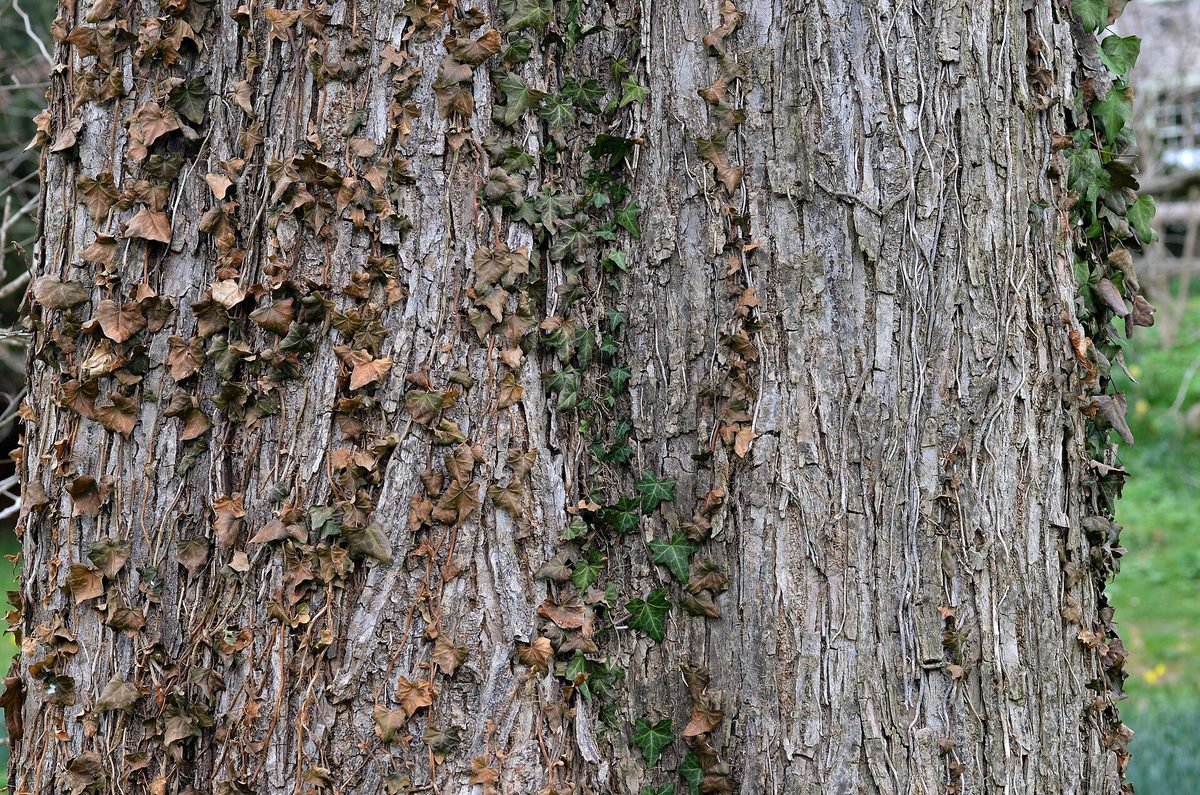
The bark is the second feature. Young elm bark is smooth and grey, but it soon becomes rough, grey brown and deeply fissured, with ridges that cross and form a rough, almost corky pattern. The trunk is often straight and tall, with bark that feels hard and ridged to the touch. On older trees the bark may flake in small plates, but it never peels in papery sheets like birch or sheds in ribbons like eucalyptus.
The shape of the whole tree is the third clue. A mature elm grows into a broad vase or fountain shape, with a short trunk that divides into several upright branches that spread outwards and then arch over. In spring, before the leaves open, elm produces small clusters of reddish flowers, followed by small flat winged seeds that ripen quickly and fall in late spring, earlier than most other trees.
How to Identify It Step by Step
- Pick one mature leaf and check the base: it should be clearly asymmetrical, with one side lower than the other, and the margin sharply toothed.
- Feel the upper surface of the leaf. Elm leaves feel rough and sandpapery, unlike the smooth leaves of beech or lime.
- Photograph the leaf flat on a plain light background in daylight, with the stalk and the uneven base clearly visible.
- Look at the bark and the whole tree: rough grey brown bark, and a tall vase-shaped crown with branches that rise and spread.
- Upload the leaf photo to the Tree Identifier, read the suggested species, then compare the bark and the tree shape before you decide the identification is correct.
Elm Species You May Meet
- English elm: Ulmus procera, once common in hedgerows, with small rough leaves, a tall vase shape, and suckers that sprout from the roots.
- Wych elm: Ulmus glabra, with larger, broader leaves than English elm, a spreading crown, and a preference for damp woodland and hillsides.
- American elm: Ulmus americana, famous for its tall vase shape along streets, with leaves that are smoother below and more evenly toothed.
- Siberian elm: Ulmus pumila, a tough small-leaved elm planted in dry and cold regions, with a more open and irregular crown.
- Chinese elm: Ulmus parvifolia, with small glossy leaves, mottled bark that flakes in patches, and leaves that fall late in autumn.
Common Mistakes to Avoid
- Missing the asymmetrical leaf base, which is the single best elm clue. Many trees have toothed oval leaves, but few are so lopsided at the base.
- Confusing elm with hazel or hornbeam, which also have toothed leaves. Hazel leaves are softer and rounder, and hornbeam leaves have more regular, parallel veins.
- Expecting elm bark to be smooth on an old tree. Elm bark roughens with age, and a smooth trunk usually means the tree is young.
- Identifying from a single young leaf, which may be less rough and less asymmetrical than a mature leaf from the middle of a branch.
Dutch Elm Disease and the Elm Today
Elm numbers fell sharply in the twentieth century because of Dutch elm disease, a fungal disease spread by bark beetles that blocks the water vessels of the tree and kills it within a few years. Many large elms died, but elms survive as young trees, as root suckers that regrow after the main stem dies, and as resistant varieties planted in streets and parks. A young elm you find today may be a sucker from an old root system that has lived in the same place for decades.
That history makes elm identification more valuable, not less. When you learn the lopsided leaf and the rough bark, you can spot the young elms that are growing back, and you can tell them apart from the hazel and hornbeam that often grow beside them. Reporting a healthy mature elm to local tree officers can also help, because surviving elms are of interest to people working to bring the tree back.
Frequently Asked Questions
How do I identify an elm tree quickly?
Check the leaf base. An elm leaf is oval, toothed and rough, with one side of the base clearly lower than the other.
What is the scientific name of the elm?
Elms belong to the genus Ulmus. Common species include Ulmus procera, Ulmus glabra and Ulmus americana.
Why are elm leaves rough?
The upper surface carries tiny stiff hairs that feel like sandpaper. That roughness is a useful clue that separates elm from smoother-leaved trees.
How tall does an elm tree grow?
Mature elms usually reach 20 to 30 metres, with a tall vase-shaped crown and a short trunk that divides into upright branches.
Try it yourself: upload a photo to the Tree Identifier and see the identification with full details on this site. Read also: How to Identify a Tree by Its Leaves.
Elm identification starts with one leaf: check the lopsided base, the sharp teeth and the rough surface, then confirm with the rough bark and the vase-shaped crown. Learn that leaf and you will recognise elm in hedgerows, parks and streets, even among trees that look similar at first glance.