
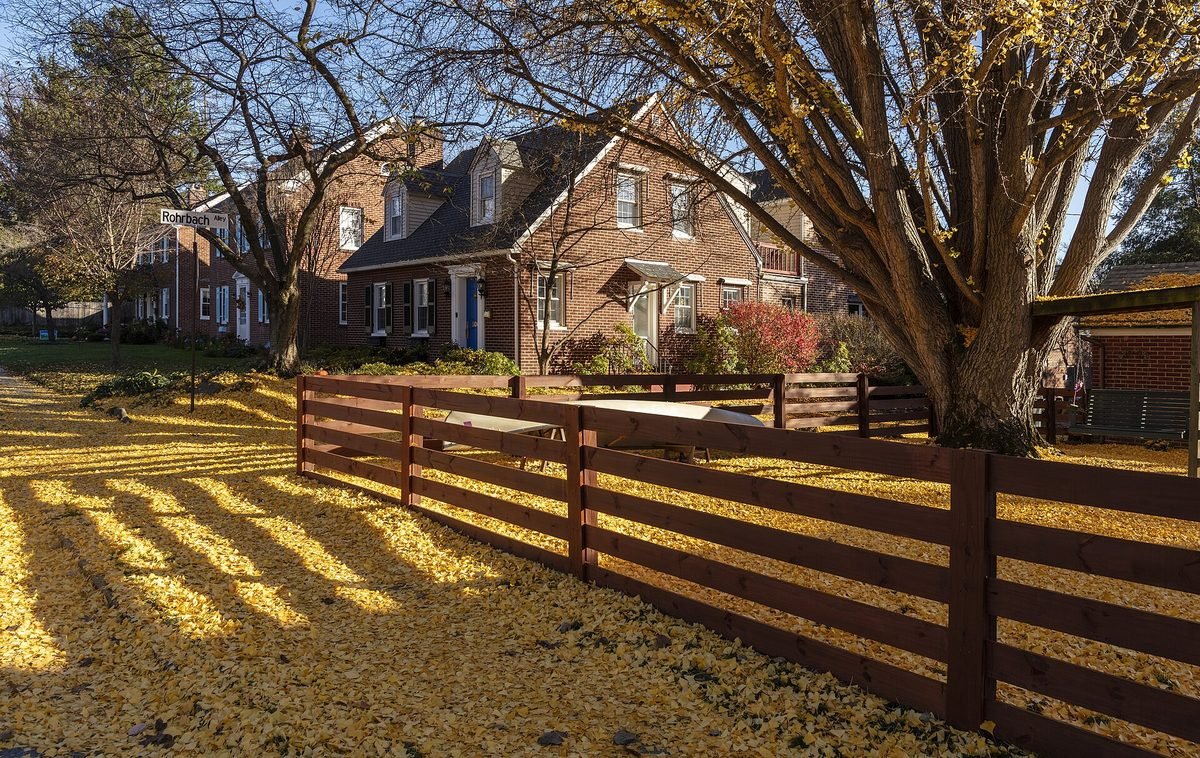
The ginkgo, Ginkgo biloba, is a living fossil, a tree whose relatives grew on Earth more than 200 million years ago, when dinosaurs walked the land. It is the only surviving species of its whole family, and its fan-shaped leaves are unlike the leaves of any other tree alive today. Ginkgos are planted in parks, gardens and city streets around the world, and they can live for more than a thousand years.
Ginkgo is one of the easiest trees to identify because its leaves are so distinctive, but beginners still need to check the bark, the buds and the fruit to be certain. The tree turns a brilliant clear gold in autumn, and its fruit has a strong smell that surprises many people. This guide explains each feature and how to photograph it.
Ginkgo Features to Check
Start with the leaves, which are the most distinctive ginkgo feature. Ginkgo leaves are fan-shaped, 5 to 10 centimetres across, with a wavy outer edge and a notch in the middle that divides the fan into two lobes. The veins run in parallel lines from the stalk to the edge, like the ribs of a fan, which is different from the branching veins of most broadleaf trees. The leaves grow in clusters on short shoots and singly on long shoots, and they are a fresh bright green in summer.
Next look at the autumn colour, which is the most famous ginkgo feature. In autumn the whole crown turns a brilliant clear gold, all at once, and the leaves fall within a few days, often covering the ground in a golden carpet. Few trees turn such a pure and even gold, and a ginkgo in full autumn colour is visible from a long way off. The fallen leaves keep their fan shape on the ground, which makes them easy to find and photograph.
The bark, buds and fruit complete the picture. Young ginkgo bark is smooth and grey brown, but on older trees it becomes deeply furrowed and grey, with ridges that run up the trunk. The buds are small, conical and brown, and they sit at the ends of the short shoots. Female trees produce round fleshy fruit, about 2 to 3 centimetres across, that smells strongly of rancid butter when ripe, so many cities plant male trees only.
How to Identify It Step by Step
- Pick one leaf and check its shape: fan-shaped, 5 to 10 centimetres across, with a notch in the middle and veins that run in parallel lines.
- Look for leaf clusters on short shoots. Ginkgo leaves grow in bunches on short spurs and singly on long shoots, which is a useful clue.
- Photograph the leaf flat on a plain light background in daylight, with the fan shape and the central notch clearly visible.
- Note the autumn colour and the fruit: brilliant clear gold in autumn, and round fleshy fruit with a strong smell on female trees.
- Upload the photo to the Tree Identifier, read the suggested species, then compare the bark and the buds before you decide the identification is correct.
Ginkgo Forms You May Meet
- Ginkgo biloba: the only living ginkgo species, with fan-shaped leaves, golden autumn colour and round fleshy fruit on female trees.
- Autumn Gold: a male ginkgo cultivar with brilliant golden autumn colour, planted in streets and parks because it produces no smelly fruit.
- Princeton Sentry: a narrow upright male ginkgo with a columnar shape, popular as a street tree where space is limited.
- Fastigiata: an upright ginkgo form with a narrow crown and the same fan-shaped leaves, often planted along avenues and paths.
- Variegated ginkgo: a garden form with cream and green striped leaves, less vigorous than the species but with the same fan shape and notch.
Common Mistakes to Avoid
- Expecting fruit on every ginkgo. Only female trees produce fruit, and many planted ginkgos are male, so a tree with no fruit can still be a ginkgo.
- Confusing ginkgo with maidenhair fern. The leaves look similar, but maidenhair is a small fern, while ginkgo is a tree that can reach 30 metres.
- Judging by autumn colour alone. Other trees turn gold in autumn, so the fan-shaped leaf with parallel veins is the feature that confirms ginkgo.
- Picking a single leaf from a long shoot. Leaves on long shoots may be larger and less notched, so check a leaf from a short shoot as well.
Ginkgo History and Survival
Ginkgo is a true living fossil, and its family was widespread across the world in the time of the dinosaurs. When the dinosaurs died out and the climate changed, most ginkgo relatives vanished, and only one species survived in the mountains of China, where it was grown in temple gardens for centuries. From China it spread to Japan and Korea, and then to Europe and America in the eighteenth century, where it is now planted in cities everywhere.
Ginkgo is also one of the toughest city trees, and it tolerates pollution, drought, salt and poor soil better than almost any other tree. It was one of the few trees to survive the atomic bombing of Hiroshima, and the ginkgos that regrew there are now symbols of resilience and hope. A ginkgo can live for more than a thousand years, and some temple ginkgos in China and Japan are thought to be among the oldest planted trees in the world.
Frequently Asked Questions
How do I identify a ginkgo tree?
Look for fan-shaped leaves with a notch in the middle, parallel veins, brilliant gold autumn colour and deeply furrowed grey bark.
What is the scientific name of the ginkgo?
Ginkgo biloba. It is the only surviving species of its family, Ginkgoaceae, and its relatives lived more than 200 million years ago.
Why does ginkgo fruit smell bad?
The fleshy fruit of female ginkgo trees contains butyric acid, which smells like rancid butter when the fruit ripens and falls in autumn.
How tall does a ginkgo grow?
Ginkgo usually reaches 20 to 35 metres, with a tall straight trunk and a broad crown, and it can live for more than 1,000 years.
Try it yourself: upload a photo to the Tree Identifier and see the identification with full details on this site. Read also: How to Identify a Tree by Its Leaves.
Ginkgo is one of the easiest trees to name: no other tree has fan-shaped leaves with parallel veins and a notch in the middle. Add the brilliant gold autumn colour and the smelly fruit on female trees, and you will recognise this living fossil in parks and city streets wherever it grows.