
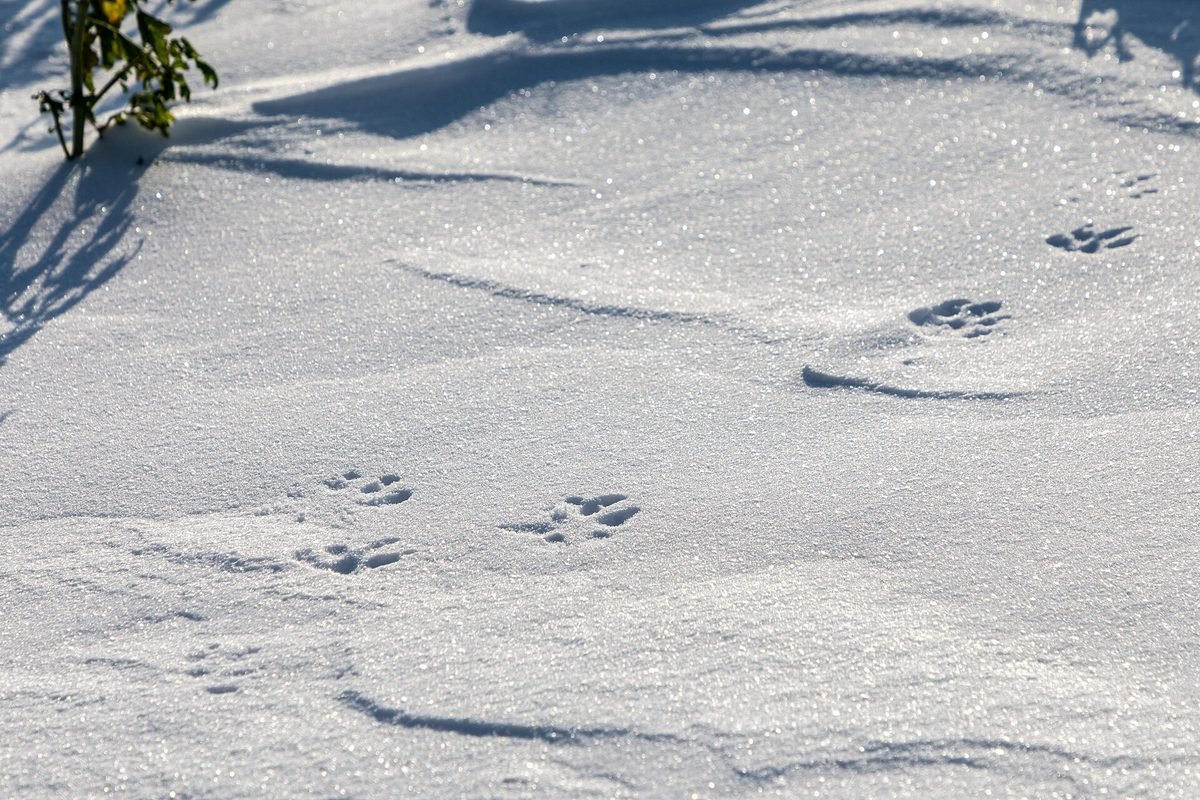
Animals are often gone long before you arrive, but they leave their stories in the mud. A line of footprints across a path, a scratched tree trunk, a pile of droppings or a half-eaten pine cone all tell you who was there, what it was doing, and how long ago it passed. Learning to read these signs turns any walk into a quiet detective story.
Tracking needs no special equipment, only patience and a willingness to look down. This guide explains the basics: how to find tracks, how to measure them, and how to tell the most common animals apart by their feet.
Reading Tracks: What to Look For
Start with the shape of the print. Count the toes, look for claw marks, and notice whether the print is round, oval or long. Dogs show four toes with claw marks, cats show four toes with no claws, and deer show two pointed hooves. Birds leave three toes pointing forward, and rabbits leave a distinctive pattern with big hind feet landing ahead of small front feet.
Size and stride come next. Measure the print from front to back, and measure the distance between one print and the next. A fox print is about five centimetres long, a badger print is wider with five toes and long claws, and a deer print is a neat pointed pair of hooves. The stride tells you whether the animal was walking, trotting or running, and a straight line of prints often means a fox or a cat, while a wandering line suggests a dog.
The ground and the weather matter as much as the print itself. Soft mud, wet sand and fresh snow hold perfect prints, while dry dust and hard ground show almost nothing. A sharp, crisp print was made recently, while a print with crumbled edges or rain damage is older. Look for tracks near water, along paths and at the edges of fields, where animals travel every day.
How to Identify It Step by Step
- Find soft ground after rain or snow, and walk slowly along paths, stream banks and field edges.
- When you find a print, photograph it with a coin or your hand beside it for scale.
- Count the toes, check for claw marks, and measure the length and width of the print.
- Follow the trail for a few metres and measure the stride to judge the animal's speed and gait.
- Note the place, the time and the weather, and compare the print with a field guide or a tracking chart.
Tracks You Are Likely to Find
- Fox: A neat oval print about five centimetres long, four toes with claw marks, in a straight purposeful line.
- Badger: A wide print with five toes and long claw marks, often in a clear trail to and from a sett.
- Deer: Two pointed hooves side by side, like a split heart, usually in a regular walking pattern.
- Rabbit: Small front feet landing behind two large hind feet, in a bounding pattern across open ground.
- Heron: Three long thin toes pointing forward, with a small back toe, in the mud at the edge of water.
Common Mistakes to Avoid
- Confusing dog and fox tracks. Dogs wander and their prints are rounder, while foxes walk in a straight line with neater prints.
- Forgetting scale. A print without something for scale is almost impossible to identify, so always photograph it with a coin.
- Trusting a single print. One print can mislead. Follow the trail and look at several prints before deciding.
- Ignoring other signs. Droppings, scratched bark, feathers and half-eaten cones often identify the animal faster than footprints.
Beyond Footprints: Other Signs
Tracks are only one part of the story. Look for droppings, which tell you what the animal eats, and for feeding signs such as nibbled bark, cracked nuts and scattered feathers. A rubbed tree trunk with hair caught in the bark may be a deer or a badger marking its territory, and a pile of pine cone scales under a tree is often the work of a squirrel or a woodpecker.
Always track quietly and respectfully. Do not follow an animal to its den or nest, and never touch droppings or dead animals with bare hands. The best trackers watch from a distance, leave no trace, and let the animals carry on their lives undisturbed.
Tracking is a skill that grows with practice, and the best way to learn is to follow one trail from start to finish. Choose a clear trail in soft mud or snow, and follow it slowly, noting where the animal stopped, turned, or fed. You will learn more from one careful trail than from a dozen single prints, because a trail tells a story: where the animal came from, what it was doing, and where it went next.
Frequently Asked Questions
What is the best ground for finding tracks?
Soft mud, wet sand and fresh snow hold the clearest prints. Look near water, on paths and at field edges.
How do I tell a dog track from a fox track?
Fox tracks are neater and form a straight line, while dog tracks are rounder and wander from side to side.
Can I identify an animal from one footprint?
Sometimes, but it is much safer to follow the trail and look at several prints, the stride and other signs.
Is tracking safe?
Yes, if you keep your distance, do not follow animals to dens or nests, and never touch droppings with bare hands.
Try it yourself: upload a photo to the Tree Identifier and see the identification with full details on this site. Read also: How Trees Support Wildlife Habitats.
Animal tracks turn a quiet walk into a story. Count the toes, measure the print, follow the trail and read the other signs, and the animals you never see will start to leave their names in the mud for you.