
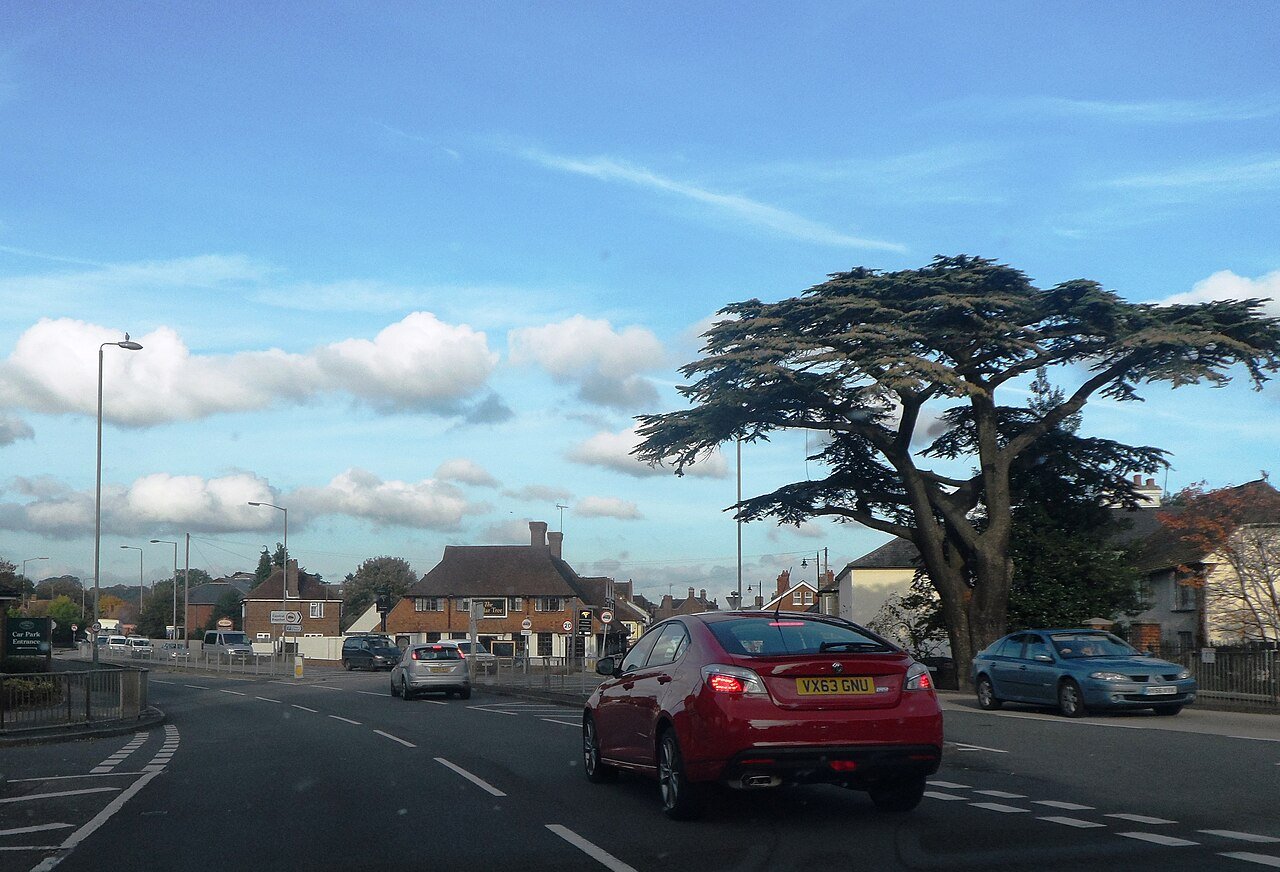
The cedar is one of the most revered trees in history. Cedar of Lebanon is mentioned in ancient texts, its wood built temples and ships, and its image stands on a national flag. Cedars are also beautiful garden trees, with level branches, short needles in clusters, and cones that stand upright like small barrels.
This guide explains the needles, cones, branches and bark of the cedar, how it differs from pine, spruce and fir, and how to tell the main cedar species apart.
Cedar Tree Features to Check
The needles are the first feature. Cedar needles are short, 1 to 3 centimetres long, stiff and pointed, and they grow in clusters of 20 to 40 on short spur shoots along the branch, with single needles on the leading shoots. That clustered arrangement is the key: pine needles grow in bundles of two to five, spruce and fir needles grow singly, and only cedar grows them in large clusters on spurs. The needles are dark green to blue-green, and they stay on the tree all year.
The cones are the second feature. Cedar cones are barrel-shaped, 7 to 12 centimetres long, and they stand upright on the branches, unlike pine and spruce cones which hang down. They take two years to ripen, and when they are ripe they break apart on the tree, shedding their scales and leaving a bare central spike behind. Finding a bare spike on a branch is itself a clue that the tree is a cedar.
The branches and bark are the third feature. Cedar branches grow in level tiers, giving the tree a flat-topped, layered silhouette that is distinctive from a distance. The bark is dark grey-brown, thick and deeply cracked into scaly plates. The wood is fragrant, reddish and very durable, which is why it has been valued for building for thousands of years.
How to Identify It Step by Step
- Look at the needles: short, stiff, 1 to 3 centimetres, growing in clusters of 20 to 40 on short spur shoots. That cluster is the key feature.
- Check the cones: barrel-shaped, upright on the branches, 7 to 12 centimetres long, breaking apart when ripe and leaving a bare spike.
- Step back and look at the shape: level tiered branches giving a flat-topped silhouette, unlike the conical shape of a young pine.
- Check the bark: dark grey-brown, thick and deeply cracked into scaly plates, on a massive trunk.
- Upload a needle and cone photo to the Tree Identifier to confirm, and compare the needle cluster with the description above.
The True Cedars
- Cedar of Lebanon: broad, flat-topped crown with level branches, dark green needles, and large upright cones; the national tree of Lebanon.
- Deodar: graceful drooping branch tips, softer blue-green needles, and long cones; native to the Himalayas and widely planted in gardens.
- Atlas cedar: blue-grey needles, upright habit, and a conical crown when young, becoming flat-topped with age; native to North Africa.
- Cyprus cedar: shorter needles and smaller cones, a rare tree native to Cyprus, with a compact conical crown.
Common Mistakes to Avoid
- Confusing cedar with pine. Pine needles grow in bundles of two to five; cedar needles grow in clusters of twenty or more on spurs.
- Confusing true cedar with western red cedar. Western red cedar is not a true cedar — it has scale-like leaves, not needles, and belongs to a different genus.
- Expecting cones to hang down. Cedar cones stand upright and break apart on the tree, so a hanging cone means it is not a cedar.
- Judging by the name alone. Many trees are called cedar, including some junipers and cypresses, but only Cedrus species are true cedars.
Cedars in History
Cedar wood has been prized for thousands of years. It is fragrant, durable, resistant to rot and insects, and beautiful to look at, which is why it was used for temples, palaces and ships in the ancient world. The cedars of Lebanon were so valued that they were harvested for centuries, and the remaining groves are now protected as a symbol of the country.
That history is part of why cedars are planted in parks and gardens all over the world: a cedar is not just a tree, it is a living piece of history, and identifying one connects you to that long story.
Frequently Asked Questions
How do I identify a cedar tree?
Look for short needles in clusters of 20 to 40 on spur shoots, upright barrel-shaped cones, level tiered branches, and dark cracked bark.
What is the scientific name of the cedar tree?
Cedrus is the genus, with species such as Cedrus libani (cedar of Lebanon) and Cedrus deodara (deodar).
What is the difference between cedar and pine?
Cedar needles grow in large clusters on spurs and its cones stand upright; pine needles grow in bundles of two to five and its cones hang down.
How tall do cedar trees grow?
Usually 25 to 40 metres tall, with a broad flat-topped crown on mature trees.
Try it yourself: upload a photo to the Tree Identifier and see the identification with full details on this site. Read also: Pine Tree Identification Guide.
The cedar is a tree of history and beauty: clustered needles, upright cones, level branches and fragrant wood. Learn the needle cluster and the upright cone, and you will recognise a true cedar anywhere — in a park, a garden, or on a mountainside in Lebanon.