
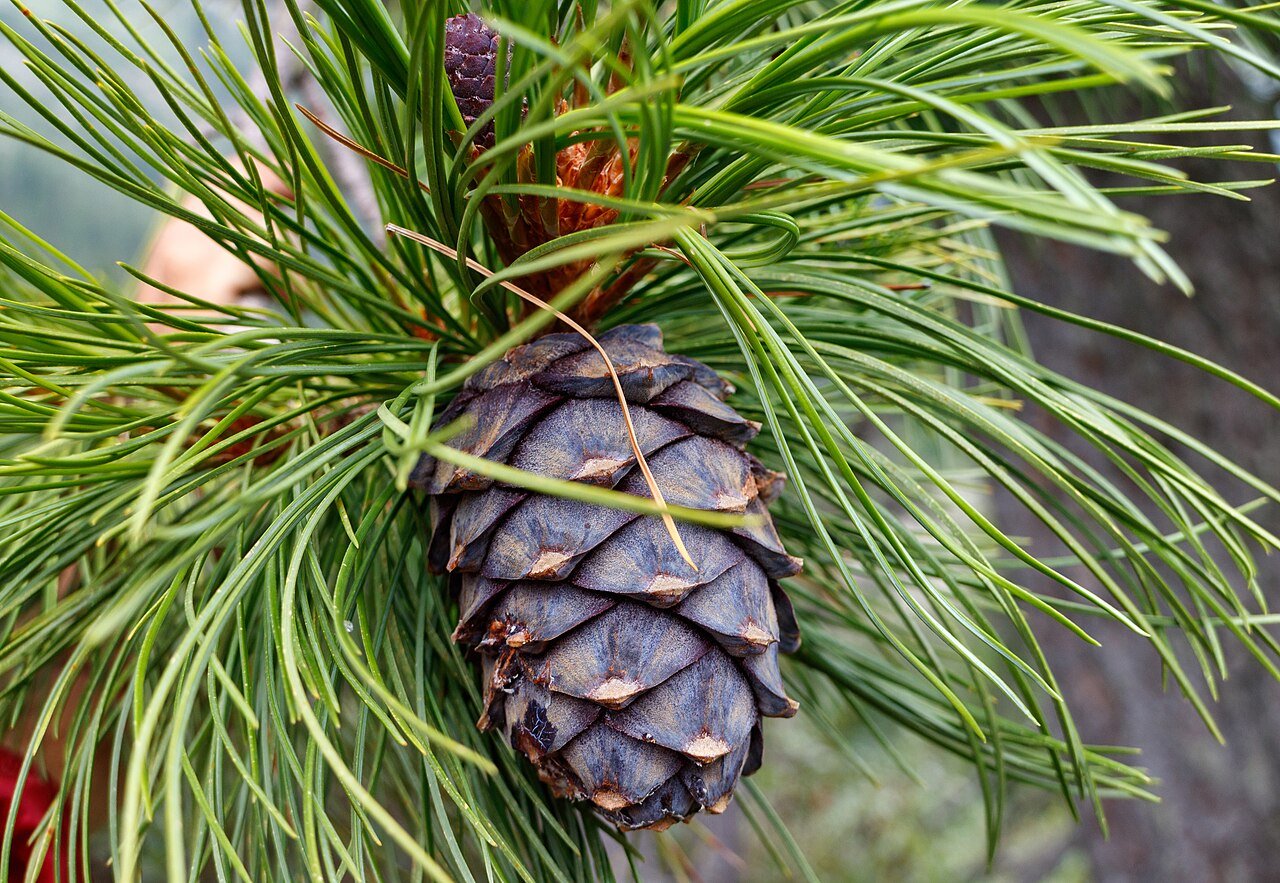
Long after the leaves have fallen and the flowers have gone, the ground under a tree is still full of clues. Acorns, winged seeds, pods, nuts and cones lie where they fell, and each one belongs to a particular tree. Learning to read them turns an autumn walk into a treasure hunt, and it lets you identify trees in the season when most people think identification is impossible.
Seeds are designed to travel, so they come in many clever shapes: wings that spin, hooks that catch fur, pods that burst open, and cones that protect the seed until the right moment. This guide explains the main seed types, how to read them, and which trees produce each one.
The Main Seed and Cone Types
Acorns are the seeds of oaks, and they are easy to recognise: a smooth nut sitting in a rough, cup-shaped cap. The cap is the key detail — some oaks have shallow caps, others have deep fringed ones, and the size of the acorn varies from a small marble to a large thumb joint. Acorns ripen in autumn, and you will often find them in large numbers under a single tree.
Winged seeds, called samaras, are built to fly. Maple samaras grow in pairs and spin like helicopters as they fall, ash samaras are single long wings, and elm samaras are small flat discs with the seed in the middle. If you find a winged seed, look at whether it is single or paired, how long the wing is, and whether the seed sits at one end or in the centre.
Cones belong to conifers such as pine, cedar, fir and spruce. Pine cones are woody and scaly, and they open when dry and close when wet. Cedar cones are barrel-shaped and sit upright on the branch, breaking apart while still on the tree. Fir cones also stand upright, while spruce cones hang down. The size, shape and position of the cone are all clues to the species.
How to Identify It Step by Step
- Collect one seed or cone from the ground under the tree, and photograph it on a plain background with something for scale.
- Note the size, shape and texture, and whether the seed is single, paired, or in a cluster. Count the scales on a cone if you can.
- Look up at the tree it fell from. Note the bark and the shape of the tree, and check whether cones are still hanging on the branches.
- Cut a nut or seed open if it is safe to do so, and note the kernel inside. Never taste a wild seed or nut.
- Upload the photo to the Tree Identifier, then confirm with the leaves or bark when the season allows.
Seeds and Cones of Familiar Trees
- Oak: acorns in cupped caps, ripening in autumn, varying from small and round to long and pointed depending on the species.
- Maple: paired winged samaras that spin as they fall, joined at the base and splitting apart when ripe.
- Pine: woody cones with overlapping scales, opening in dry weather to release small winged seeds.
- Ash: single long winged seeds that hang in large clusters through winter, long after the leaves have fallen.
- Acacia: long flat pods that split open to reveal rows of small hard seeds, often still hanging on the tree in the dry season.
Common Mistakes to Avoid
- Identifying from a single seed without checking the tree above it. Wind can carry seeds far from their parent tree, especially light winged ones.
- Confusing a cone with a fruit. Cones are the reproductive structures of conifers, and they open and close with the weather, while fruits are fleshy and soft.
- Handling seeds with bare hands when you have cuts, or tasting wild seeds. Some seeds are toxic, and the risk is not worth it.
- Forgetting that cones change with age. A young green cone looks very different from a mature brown one on the same tree.
Why Seeds Look the Way They Do
Every seed shape is an answer to the same problem: how to get the next generation away from the parent tree. Wings catch the wind, hooks catch passing animals, fleshy fruit tempts birds to carry the seed away, and hard shells protect the seed until the right season. When you learn to read a seed, you are reading the tree's whole strategy for survival.
Try a simple experiment with a maple samara: drop it from shoulder height and watch it spin. That spinning wing is the reason maples spread so far and so fast, and it is also the reason a single samara can identify a maple from twenty metres away.
Frequently Asked Questions
Can a seed alone identify a tree?
Often yes, especially for distinctive seeds such as acorns, maple samaras and pine cones. For similar-looking seeds, add bark and leaves to confirm.
When is the best time to look for seeds and cones?
Autumn is the best season, when most trees drop their seeds. Cones can be found all year, and ash seeds hang on the tree through winter.
Are wild seeds safe to eat?
No. Never eat a wild seed or nut based on a photograph or a guess. Some seeds are toxic, and identification must be confirmed by a local expert.
What is the difference between a cone and a fruit?
A cone is the woody reproductive structure of a conifer such as pine or cedar. A fruit is the fleshy structure of a flowering tree, such as an apple or a mango.
Try it yourself: upload a photo to the Tree Identifier and see the identification with full details on this site. Read also: Identify a Tree by Its Fruit.
Seeds and cones are the quiet clues of the tree world: they lie on the ground waiting to be read, long after the flowers and leaves are gone. Learn the main types — acorns, samaras, pods, nuts and cones — photograph them with a scale, and check the tree above. An autumn walk will never look empty again.