
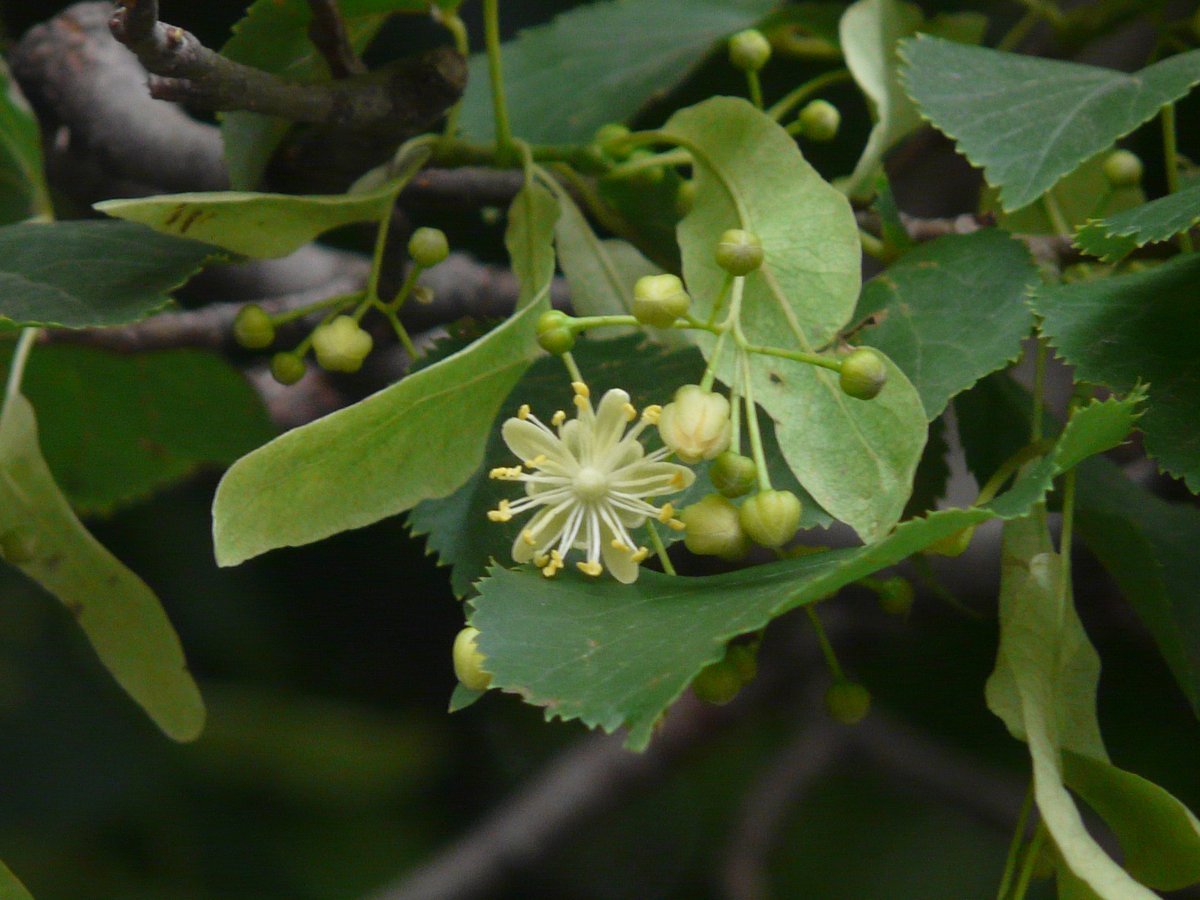
Linden trees are among the most familiar shade and street trees in parks, avenues and gardens across the temperate world. Also called lime trees in Britain and basswood in North America, they belong to the genus Tilia. Once you learn their three signature features, heart-shaped leaves, fragrant pale flowers and a wing-like bract, you will start spotting them everywhere.
This guide walks you through linden identification in every season: the leaves first, then the flowers and fruit, the bark and the overall shape, so you can confirm a linden even in mid-winter.
Leaves: The Heart-Shaped Giveaway
Linden leaves are broad, soft and heart-shaped, with a pointed tip and a finely toothed edge. The base is usually uneven, with one side meeting the stalk slightly lower than the other. Held up to the light, the veins spread from the stalk like the ribs of a fan. The upper surface is fresh green, while the underside is paler and often carries small tufts of hair where the veins meet.
Leaf size varies by species and region, but the shape stays consistent, which is why it is such a dependable clue. In spring the young leaves are bright, almost translucent green and soft to the touch. In autumn they turn clear yellow before they fall. If the leaf you hold is heart-shaped, uneven at the base and finely toothed, you are very likely looking at a linden.
Flowers and the Wing-Like Bract
In early to mid-summer the linden produces clusters of small, creamy yellow flowers with a sweet, honey-like scent that can fill a whole street. Bees love them, and on a warm evening you may hear the hum of insects before you see the tree. Each flower has five pale petals, and they hang in loose clusters from the twigs.
What makes the flowers unmistakable is the bract: each cluster hangs from a long, narrow, pale green strap that looks like a small leaf or wing. This bract is unique to lindens and the single best confirming feature of the tree. After the flowers fade, the same bract acts as a wing, helping the small, round, nut-like fruits spin away in the wind. A pale strap on a flower cluster or small round fruit means you have found a linden.
Bark and Shape Through the Seasons
Young linden bark is smooth and grey-brown, and as the tree ages it darkens and develops shallow fissures and flat ridges. It never becomes as deeply furrowed as oak bark. Old trees often produce suckers, young shoots sprouting from the base of the trunk, which is another helpful hint.
The overall shape is neat and regular. Many lindens grow into a broad, rounded or pyramidal crown with dense foliage that casts deep shade, which is why they are widely planted along streets and in parks. In winter, look for the smooth grey bark, fine twigs, small round buds, and any dry bracts or fruits still clinging to the branches.
How to Identify a Linden in 5 Steps
Use these steps on your next walk, and check more than one feature before you decide.
- Pick a leaf. Is it heart-shaped, with a pointed tip, a finely toothed edge and an uneven base? If yes, keep going.
- Look at the underside. Are there small tufts of hair in the vein corners? Their colour can even help separate the common species.
- Find the flowers or fruit. In summer, look for pale yellow flower clusters hanging from a long, strap-like bract. In autumn, look for small round fruits with the same bract.
- Check the bark and base. Smooth grey bark on a young tree, shallow ridges on an older one, and shoots sprouting from the base all support a linden identification.
- Confirm with a second source. Compare your notes with a field guide, or photograph the leaf and flower and check them with the tree identifier tool.
Quick Clues Checklist
- Heart-shaped leaf with an uneven base and finely toothed edge.
- Pale, strap-like bract attached to the flower cluster or fruit.
- Fragrant creamy-yellow flowers in early to mid-summer, busy with bees.
- Small round fruits that spin away on their bract wings.
- Smooth grey bark on young trees, shallowly ridged on old ones.
- Yellow autumn colour and a neat, rounded crown.
Common Mistakes to Avoid
- Confusing linden with other heart-leaved trees. Some poplars and mulberries also have heart-shaped leaves, but they lack the wing-like bract, so always check for it.
- Expecting a lime fruit. Despite the name lime tree, lindens are not related to citrus limes and do not produce lime fruits.
- Relying on flowers alone. The flowering season is short, so learn the leaf and bark as well, or you will miss lindens most of the year.
- Ignoring the underside of the leaf. The hair tufts in the vein corners are a key detail, and they differ between the common species.
- Guessing from the name on a street sign. Street and park trees are sometimes mislabelled, so trust the features, not the label.
Frequently Asked Questions
Is a lime tree the same as a linden tree?
Yes. In Britain the trees of the genus Tilia are called lime trees, while in North America they are usually called linden or basswood. They have no connection with the citrus lime fruit.
When do linden trees flower?
It varies by species and region, but most lindens flower in early to mid-summer, and the flowers last only a few weeks. Their sweet scent is often the first thing people notice.
What is the wing-like strap on a linden flower?
It is a bract, a modified leaf that the flower cluster hangs from. After flowering it helps the small round fruits spin through the air, away from the parent tree.
Can I identify a linden in winter?
Yes, with more care. Look for smooth grey bark, small round buds and fine twigs, any dry bracts or fruits still on the branches, and the neat crown shape.
Lindens reward the observer in every season, from the soft heart-shaped leaves of spring to the honey-scented flowers of summer and the golden canopy of autumn. Learn the leaf, the bract and the bark, and you will never walk past one unknowingly again. For more on leaf features, see our guide to identifying a tree by its leaves, or test your skills with the tree identifier tool.
Featured image: Wikimedia Commons (CC / public domain).