
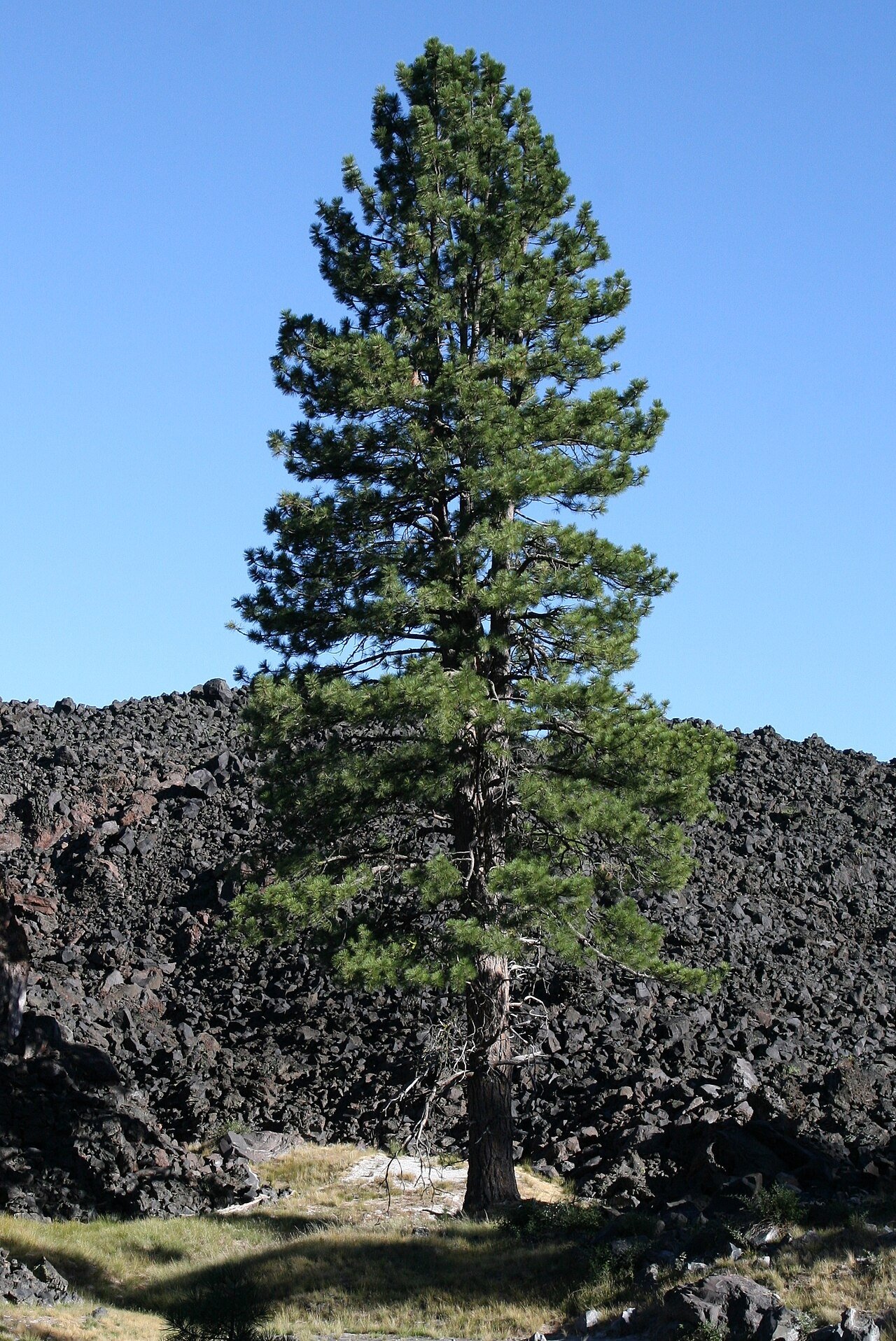
Pines are the most familiar conifers in the world, and they are also among the easiest to identify — if you know the one trick that matters most. Count the needles in a bundle. Pines are the only common conifers that grow their needles in bundles of two, three or five, held together by a tiny papery sheath, and that count separates the species more reliably than any other feature.
This guide explains the needle count, the cones, the bark and the shape of the pine tree, and how to use them together to name a pine in any season, because pines are evergreen and their clues never fall.
Pine Tree Features to Check
The needles are the decisive feature. Pine needles are long, thin and flexible, growing in bundles called fascicles from a single point on the twig. Count how many needles are in one bundle: two needles suggests Scots pine or red pine, three suggests ponderosa or loblolly pine, and five suggests white pine or Himalayan pine. The needles are usually 5 to 20 centimetres long, and their colour ranges from blue-green to yellow-green depending on the species.
The cones are the second feature. Pine cones are woody, scaly and usually 5 to 15 centimetres long, hanging down from the branches and opening in dry weather to release small winged seeds. The scales can be thin and flat or thick and prickly, and the shape of the cone — long and narrow, or short and round — helps to separate species. Young cones are green and closed; mature cones are brown and open.
The bark and shape are the third feature. Pine bark is scaly and flaky, often orange-red on the upper trunk and grey-brown lower down, and it peels in plates. The tree is usually tall and straight, with a conical crown when young that becomes flat-topped and open with age. A mature pine often has a bare lower trunk with branches only at the top, which is a useful clue from a distance.
How to Identify It Step by Step
- Pick one needle bundle and count the needles: two, three or five. That count is the most important clue.
- Measure the needles and note their colour. Long soft needles suggest white pine; short stiff needles suggest Scots pine.
- Look for cones on the tree and on the ground. Note their size, shape and whether the scales are prickly or smooth.
- Check the bark: scaly plates, often orange-red high on the trunk, grey-brown lower down.
- Upload a needle and cone photo to the Tree Identifier to confirm, and compare the needle count with a guide for your region.
Common Pine Species
- Scots pine: two needles per bundle, short stiff blue-green needles, orange-red bark high on the trunk, and small cones.
- White pine: five soft needles per bundle, long flexible blue-green needles, and long narrow cones with thin scales.
- Ponderosa pine: three long needles per bundle, very tall straight trunk, and large cones with prickly scales.
- Stone pine: two needles per bundle, broad umbrella-shaped crown, and large cones with edible pine nuts inside.
- Himalayan pine: five long drooping needles per bundle, graceful weeping branches, and very long slender cones.
Common Mistakes to Avoid
- Counting needles from different bundles and averaging them. Count several bundles from the same tree — the number should be consistent.
- Confusing pine with spruce or fir. Spruce and fir needles grow singly, not in bundles, and their cones hang differently — check the bundle first.
- Judging by cones alone. Cone size varies with the age of the tree and the season, so always combine cones with the needle count.
- Expecting pines to look the same all year. Young pines are conical, old pines are flat-topped, and the shape changes with age.
Pines in Winter and in the Landscape
Pines are evergreen, so their needles, cones and bark are available in every season, including the middle of winter when most other trees are bare. That makes winter the best time to practise pine identification: the bare landscape leaves the pines standing out, and the needle bundles are easy to reach and count.
Pines are also planted more widely than almost any other tree, for timber, for windbreaks and for Christmas trees. A pine you identify in a plantation, a park or a garden is likely to be one of a handful of common species, and the needle count will usually name it within a minute.
Frequently Asked Questions
How do I identify a pine tree?
Count the needles in a bundle: two, three or five. Then check the cones, the bark and the shape of the tree to confirm the species.
What is the scientific name of the pine tree?
Pinus is the genus, with species such as Pinus sylvestris (Scots pine) and Pinus strobus (white pine).
What is the difference between pine, spruce and fir?
Pine needles grow in bundles of two, three or five; spruce and fir needles grow singly. Pine cones hang down and fall whole; fir cones stand upright and break apart on the tree.
Are pine cones edible?
Pine nuts from some species, such as stone pine, are edible. The cones themselves are not food, and wild seeds should never be eaten without expert guidance.
Try it yourself: upload a photo to the Tree Identifier and see the identification with full details on this site. Read also: Cedar Tree Identification Guide.
The pine tree rewards one simple habit: count the needles in a bundle. Two, three or five — that number, plus the cones and the scaly bark, will name most pines you meet. Because pines are evergreen, you can practise in any season, and the skill will stay with you for life.