
Citrus trees are among the most rewarding fruit trees to identify, because they give you a clue you can smell as well as see. Crush a leaf and the scent of lemon, orange or lime fills the air. Add glossy evergreen leaves, fragrant white flowers and round segmented fruit, and a citrus tree is unmistakable — even before the fruit ripens.
This guide explains the leaves, flowers, fruit and scent of citrus trees, and how to tell lemon, orange, lime and grapefruit apart, because their fruit and leaves are similar and the differences are in the details.
Citrus Tree Features to Check
The leaves are the fastest clue. Citrus leaves are glossy, dark green, oval and pointed, 5 to 10 centimetres long, with a smooth margin and a winged stalk — a small flat flap where the leaf meets its stalk. They are evergreen and arranged alternately, and they smell strongly of citrus when crushed. That scent is the most reliable test: a leaf that smells of lemon is a citrus leaf, whatever the tree looks like.
The flowers are the second feature. Citrus flowers are small, white and five-petalled, with a powerful sweet scent that can fill a garden. They open in spring, often at the same time as the previous year's fruit is still hanging, so a citrus tree can carry flowers and fruit together. The flowers are visited by bees, and a flowering citrus is one of the sweetest-smelling trees you can meet.
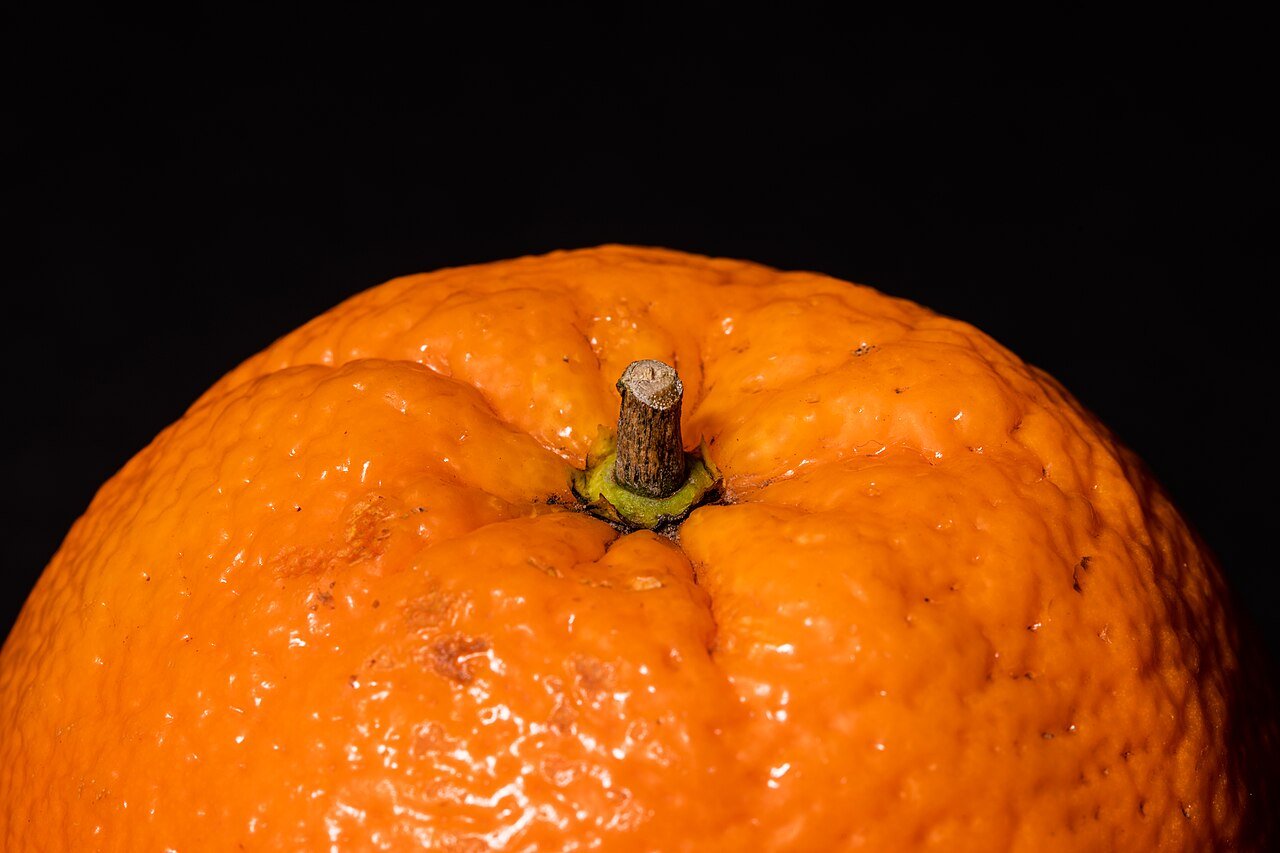
The fruit is the third feature. Citrus fruit is round or oval, with a thick peel that is green, yellow or orange, and juicy segments inside with a few seeds. Lemons are oval and yellow with a pointed tip, oranges are round and orange, limes are small and green, and grapefruit are very large and pale yellow. Cut the fruit open and count the segments: citrus fruit always divides into segments, and that structure is unique to the family.
How to Identify It Step by Step
- Crush a leaf and smell it. A strong citrus scent confirms the tree is a citrus, whatever else it looks like.
- Check the leaves: glossy, oval, dark green, with a winged stalk, evergreen and arranged alternately.
- Look for the flowers in spring: small white five-petalled flowers with a powerful sweet scent, often open with fruit still on the tree.
- Check the fruit: round or oval, thick peel, juicy segments inside. Note the size, colour and shape to separate lemon, orange, lime and grapefruit.
- Upload a leaf or fruit photo to the Tree Identifier or Fruit Identifier to confirm, and compare the fruit with the descriptions below.
Common Citrus Trees
- Lemon: oval yellow fruit with a pointed tip, strongly acidic juice, and a small thorny tree with pale green leaves.
- Sweet orange: round orange fruit with sweet juicy segments, a medium tree with dark green leaves and few thorns.
- Lime: small round green fruit with very acidic juice, a small bushy tree with small leaves and sharp thorns.
- Grapefruit: very large pale yellow fruit with bitter-sweet flesh, a large tree with broad leaves and a spreading crown.
- Mandarin: small flattened orange fruit with a loose peel that comes off easily, and a small compact tree.
Common Mistakes to Avoid
- Confusing citrus with other evergreen fruit trees. The crushed-leaf scent is the test — if it does not smell of citrus, it is not a citrus.
- Judging by fruit colour alone. Unripe oranges are green, ripe limes can turn yellow, and the same tree can carry fruit of several colours.
- Expecting thorns on every citrus. Some varieties are thornless, and thorns vary with the age of the tree, so they are a weak clue.
- Assuming the fruit is ready when it colours. Citrus fruit should be tasted or checked for softness as well as colour, because colour alone can mislead.
Growing Citrus Trees
Citrus trees need full sun, well-drained soil and protection from frost. They grow best in warm climates, and in cold regions they are grown in pots and brought indoors in winter. Water them regularly but never let the roots sit in water, and feed them in spring with a fertiliser made for citrus. Prune lightly after fruiting to keep the centre open to light.
A citrus tree can fruit for decades, and a single mature tree can produce hundreds of fruit in a good year. That long productive life is why citrus trees are planted in gardens all over the warm world, and why identifying one correctly is the first step to caring for it well.
Frequently Asked Questions
How do I identify a citrus tree?
Crush a leaf and smell it: a strong citrus scent confirms it. Then check the glossy evergreen leaves with winged stalks, fragrant white flowers, and segmented fruit.
What is the difference between a lemon and a lime tree?
Lemon fruit is oval, yellow and pointed; lime fruit is small, round and green. Lemon trees are larger with paler leaves; lime trees are smaller and thornier.
When do citrus trees produce fruit?
Citrus fruit ripens from autumn to spring, depending on the variety. Lemons can fruit almost all year in warm climates.
Can citrus trees grow in cold climates?
Citrus needs warmth and protection from frost. In cold climates, grow citrus in pots and bring them indoors in winter.
Try it yourself: upload a photo to the Tree Identifier and see the identification with full details on this site. Read also: Apple Tree Identification Guide.
The citrus tree gives itself away with a smell: crush a leaf and the answer is in the air. Learn the glossy leaves, the winged stalks, the fragrant white flowers and the segmented fruit, and you will recognise lemon, orange, lime and grapefruit wherever they grow.