
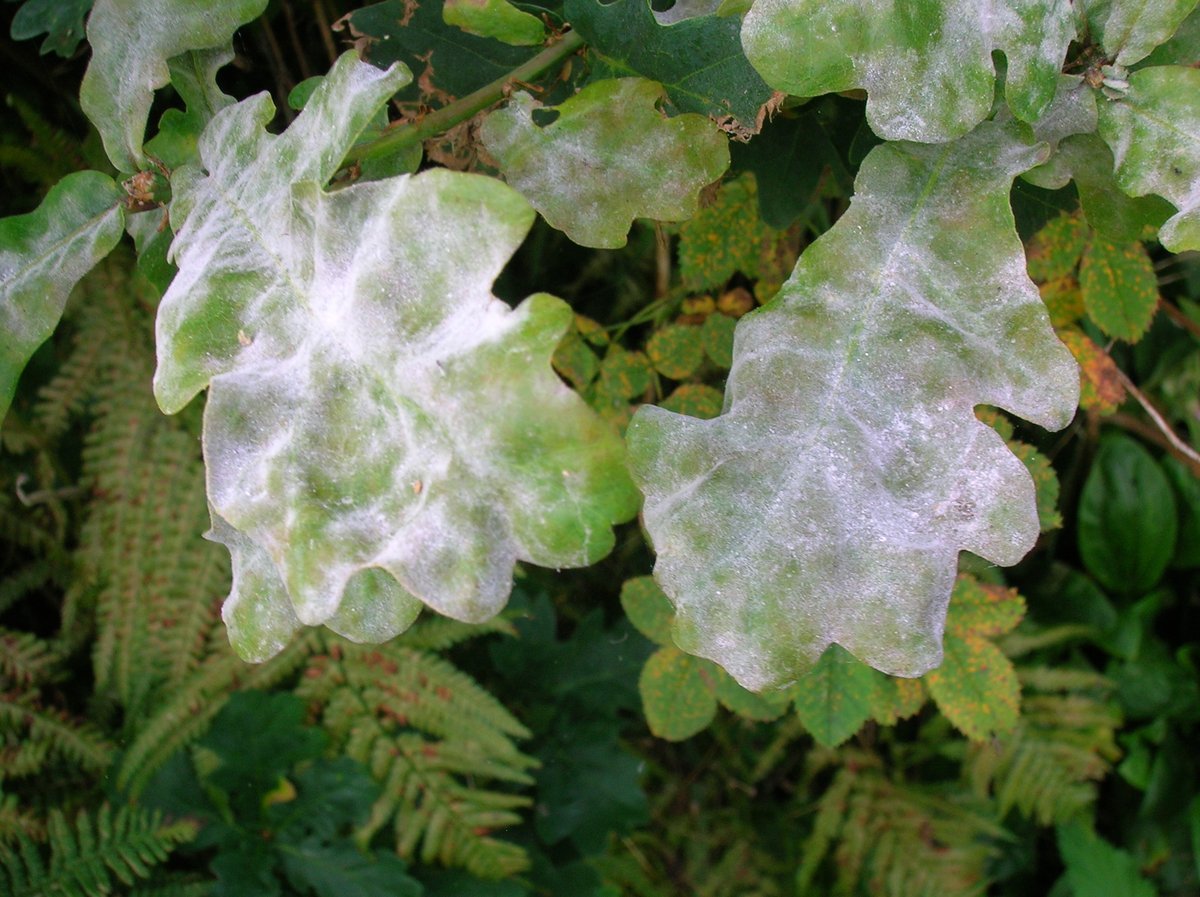
Powdery mildew is one of the easiest tree diseases to recognise. It appears as a white or pale grey, powdery coating on leaves, young shoots and sometimes buds, as if someone had dusted the tree with flour.
Although it looks alarming, powdery mildew is rarely fatal to a large, established tree. It can, however, weaken young trees, distort new growth, and make a tree look unsightly for the season. The good news is that it is also one of the most manageable tree problems, and simple cultural steps, such as improving air flow and avoiding wetting the leaves, often do more good than any spray.
How to Identify Powdery Mildew
The first sign is a white, powdery patch on the upper surface of a leaf, which may spread until the whole leaf looks dusty. Young leaves are affected first, and they may curl, pucker or grow in a distorted shape. On some trees the coating is thin and easy to miss, while on others it is thick and obvious, covering whole shoots.
As the season goes on, the white coating may turn slightly yellow or brown, and heavily affected leaves may drop early. Small, dark dots may appear in the mildew late in the season; these are the resting bodies of the fungus, which survive winter on fallen leaves and buds. Mildew on oaks is especially common, and a young oak with white, curled leaves in summer is a classic sight.
Why Powdery Mildew Appears
Powdery mildew fungi are unusual among plant diseases because they do not need wet leaves to infect a tree. They thrive in warm days and cool, humid nights, and they spread by spores carried on the wind. Dense, crowded growth with poor air circulation gives the spores an ideal place to settle, and young, soft leaves are the easiest to infect.
Some tree species and varieties are more prone to mildew than others, and the same tree may suffer in one year and stay clean in the next, depending on the weather. Overfeeding with fertiliser can make the problem worse, because it produces a flush of soft, succulent growth that mildew loves. Drought stress can also increase susceptibility, since a stressed tree has fewer resources to defend itself.
Safe Steps to Help an Affected Tree
For most garden trees, cultural care is the safest and most effective response to powdery mildew. Start by improving air flow around the tree: prune out crowded or crossing branches in the dormant season, and clear weeds and dense planting from beneath the canopy.
Remove and dispose of badly affected leaves and shoots where this is practical, and clear fallen leaves in autumn, since the fungus can survive winter on them. Do not compost diseased material. Keep the tree healthy with a mulch ring and watering during dry spells, and avoid heavy fertiliser, which encourages soft growth. If you want to use a spray, choose a simple, labelled garden product approved for your area, follow the label exactly, and test it on a small area first. For a valuable or badly affected tree, ask a local arborist or extension service for advice before spraying.
Five Steps to Manage Powdery Mildew
Use this simple routine when you first notice the white coating, and repeat it through the season. It focuses on safe, practical care rather than harsh chemicals.
- Confirm the diagnosis. Check that the white coating smears like dust and is on young leaves and shoots, and photograph it for comparison.
- Improve air flow. Prune out crowded branches in the dormant season and clear dense growth from around the tree.
- Change how you water. Water the soil at the base, not the leaves, and water in the morning so foliage dries fast.
- Remove badly affected growth. Pick off heavily mildewed leaves and shoots where practical, and dispose of them in the bin, not the compost.
- Monitor and record. Note how far the mildew spreads and whether it returns next year, so you can judge whether the tree needs more help.
Prevention for Next Season
- Prune in the dormant season to open up the crown and improve air flow.
- Space new trees well apart so air can move between them.
- Water at the base of the tree, not over the leaves.
- Clear fallen leaves in autumn to reduce the spores that survive winter.
Common Mistakes to Avoid
- Spraying at the first sign of white dust. A light attack on a large tree often needs no spray at all, and cultural care is usually enough.
- Watering the leaves in the evening. Wet leaves overnight favour many fungal problems, so water the soil in the morning instead.
- Composting mildewed leaves. Home compost rarely gets hot enough to kill the fungus, so dispose of diseased leaves properly.
- Overfeeding the tree. Heavy fertiliser produces soft growth that mildew attacks easily, so feed lightly or not at all.
- Ignoring a badly affected young tree. A young tree stripped of healthy leaves for a whole season may need professional advice.
Frequently Asked Questions
Is powdery mildew dangerous to people or pets?
No. Powdery mildew on trees is a plant disease and is not known to harm people or pets.
Will powdery mildew kill my tree?
Very rarely. On a large, established tree it is usually a cosmetic problem that the tree outgrows.
Can I wash powdery mildew off the leaves?
Washing may remove some of the white coating, but it does not cure the infection, which grows on and inside the leaf surface. It can also spread spores to other leaves.
Does powdery mildew come back every year?
It often does, because the fungus survives winter on buds and fallen leaves and spreads by wind in spring. Clearing fallen leaves, pruning for air flow and keeping the tree healthy reduce the problem each year, even if a few spots still appear in a warm, humid summer.
Powdery mildew is a common, visible and usually manageable tree problem, and a calm response is almost always the right one. Identify the white coating, improve air flow and watering, and keep the tree healthy. If you need help naming the tree, use the tree identifier, and read how to spot sick trees and the tree disease identifier guide for more help. For a valuable tree that is badly affected, a local arborist or extension service can advise on safe treatment.
Featured image: Wikimedia Commons (CC / public domain).