
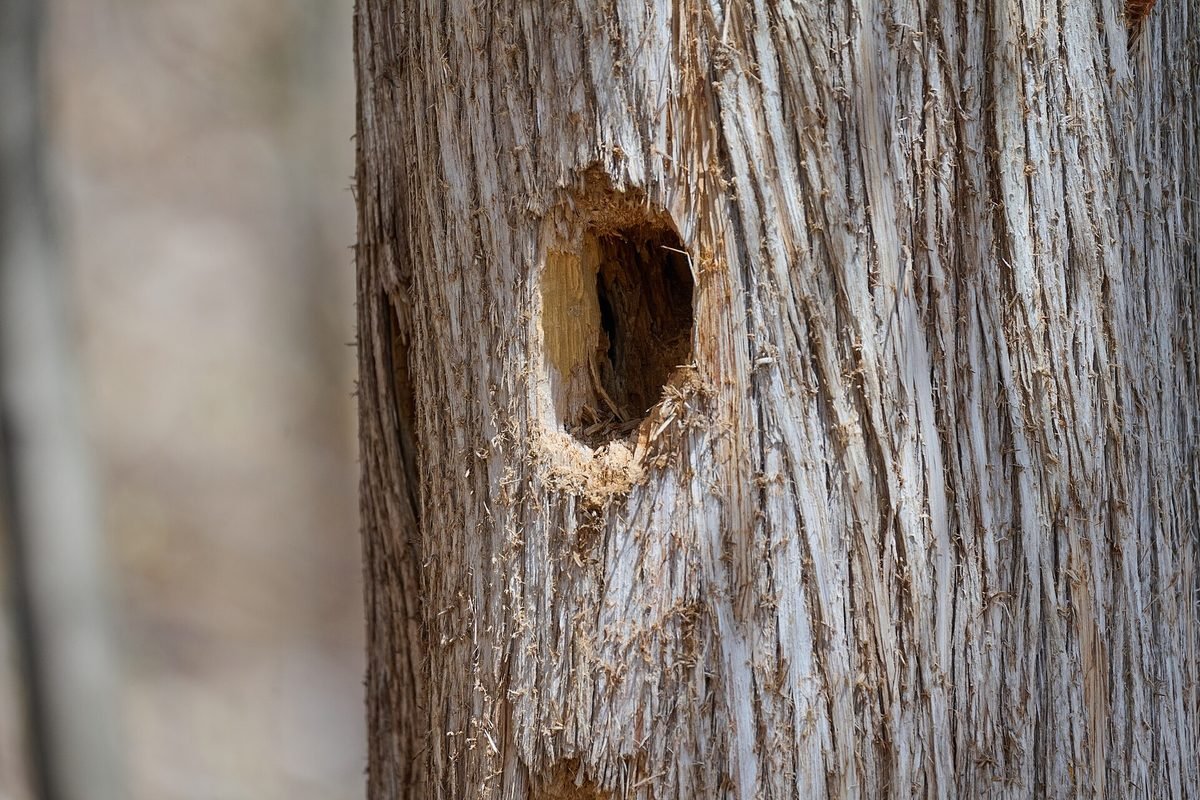
Woodpeckers announce themselves with sound: a rapid drum roll on a dead branch in spring, a sharp, laughing call from a woodland edge, or the tap-tap of a beak searching a tree trunk for insects. They are among the most exciting birds to find, because they live on trees, they climb in a way no other bird does, and their black, white and red plumage stands out against bark. Once you learn their habits, you will spot them often.
Woodpecker identification uses the same field marks as other birds — size, colour, beak and behaviour — plus two extra clues: drumming and the way the bird climbs. This guide explains the common woodpeckers, how to tell them apart, and how to watch them in woods and gardens without disturbing them.
Woodpecker Field Marks to Check
Colour and pattern are the first clues. The great spotted woodpecker is black and white with a red patch under the tail, and the male has a red patch on the back of the head. The lesser spotted woodpecker is smaller, with barred black and white wings and a red crown on the male. The green woodpecker is larger and green, with a yellow rump, a red crown and a black face mask, and it is often seen on the ground, feeding on ants.
Size and shape come next. A great spotted woodpecker is about the size of a blackbird, with a strong, chisel-like beak and a stiff tail that props it against a trunk. A lesser spotted woodpecker is sparrow-sized, much smaller and harder to see high in the canopy, while a green woodpecker is larger, about the size of a jackdaw, with a long, slightly curved beak for probing. Size beside a familiar bird, and the shape of the beak, will separate the three common species.
Behaviour and sound complete the picture. Woodpeckers climb up a trunk in short hops, using stiff tail feathers as a prop, and they drum in spring to claim a territory, each species with its own rhythm. Great spotted woodpeckers drum loudly on dead wood, green woodpeckers give a loud, laughing yaffle call, and lesser spotted woodpeckers drum quietly and briefly. Note the tree, the height and the sound, and the bird will often name itself.
How to Identify It Step by Step
- Listen first for drumming or a sharp call, and look towards the sound, scanning the trunks and branches of nearby trees.
- Note the size beside a familiar bird, the colour pattern, and whether the bird is black and white, green, or small and barred.
- Watch how it climbs: short hops up a trunk, tail pressed to the bark, and pauses to peck or listen for insects.
- Check the tree and the place: dead wood, a garden feeder with peanuts, a lawn with ants, or high in a woodland canopy.
- Take a photo if you can, compare colour, size and drumming with a guide, and watch from a distance without disturbing the nest hole.
Woodpeckers You May Meet
- Great spotted woodpecker: A black and white woodpecker with a red patch under the tail, common in woods and gardens, visiting peanut feeders.
- Lesser spotted woodpecker: A small, sparrow-sized woodpecker with barred wings, hard to see high in the canopy, drumming quietly in spring.
- Green woodpecker: A large green woodpecker with a red crown and a laughing call, often seen on lawns feeding on ants.
- Wryneck: A rare, brown, mottled bird related to woodpeckers, with a snake-like neck twist, visiting open ground in spring and autumn.
- Black woodpecker: A large, all-black woodpecker with a red crown, rare in Britain but found in forests across Europe and Asia.
Common Mistakes to Avoid
- Calling every black and white woodpecker a great spotted. The lesser spotted is much smaller, with barred wings and a different drum.
- Expecting a green woodpecker to be on a tree. Green woodpeckers often feed on the ground, on lawns and anthills, where they look quite different.
- Confusing drumming with feeding taps. Drumming is a fast, even roll for display, while feeding taps are slower and irregular as the bird searches.
- Approaching a nest hole too closely. Woodpeckers are sensitive while nesting, so watch from a distance and never tap the tree.
Woodpeckers Through the Seasons
Woodpeckers are present all year, but spring is the best time to find them, when they drum to claim a territory and carve a nest hole in dead wood. The drumming carries far through a bare wood, and a morning walk in March or April can reveal several birds by sound alone. In summer, the adults feed noisy young in the nest hole, and in autumn, great spotted woodpeckers visit garden feeders for peanuts and fat, where they are easy to watch.
Woodpeckers need dead wood, so a wood with standing dead trees, fallen logs and old branches will hold more woodpeckers than a tidy park. Leave dead wood where it is safe to do so, and avoid felling a tree with a nest hole. A garden with a peanut feeder, a dead branch and some old trees will soon attract a great spotted woodpecker, and it may return every day through the winter.
Frequently Asked Questions
How do I tell a great spotted from a lesser spotted woodpecker?
The great spotted is blackbird-sized with a red patch under the tail, while the lesser spotted is sparrow-sized with barred wings.
Why do woodpeckers drum on trees?
They drum in spring to claim a territory and attract a mate, using a dead branch or a hollow trunk that makes a loud, resonant sound.
Do woodpeckers get headaches from pecking?
No. Their skull, beak and neck absorb the shock of pecking, and their brain is held tightly so it does not move inside the skull.
What do woodpeckers eat?
They eat insects and larvae from under bark, ants from the ground, and seeds and nuts, including peanuts from garden feeders.
Try it yourself: upload a photo to the Tree Identifier and see the identification with full details on this site. Read also: How to Identify Birds by Photo.
Woodpeckers are found by sound first: listen for the drum, look for the climb, and check size and colour. Learn the great spotted, the lesser spotted and the green woodpecker, keep your distance from nest holes, and the trees around you will come alive with drumming.