
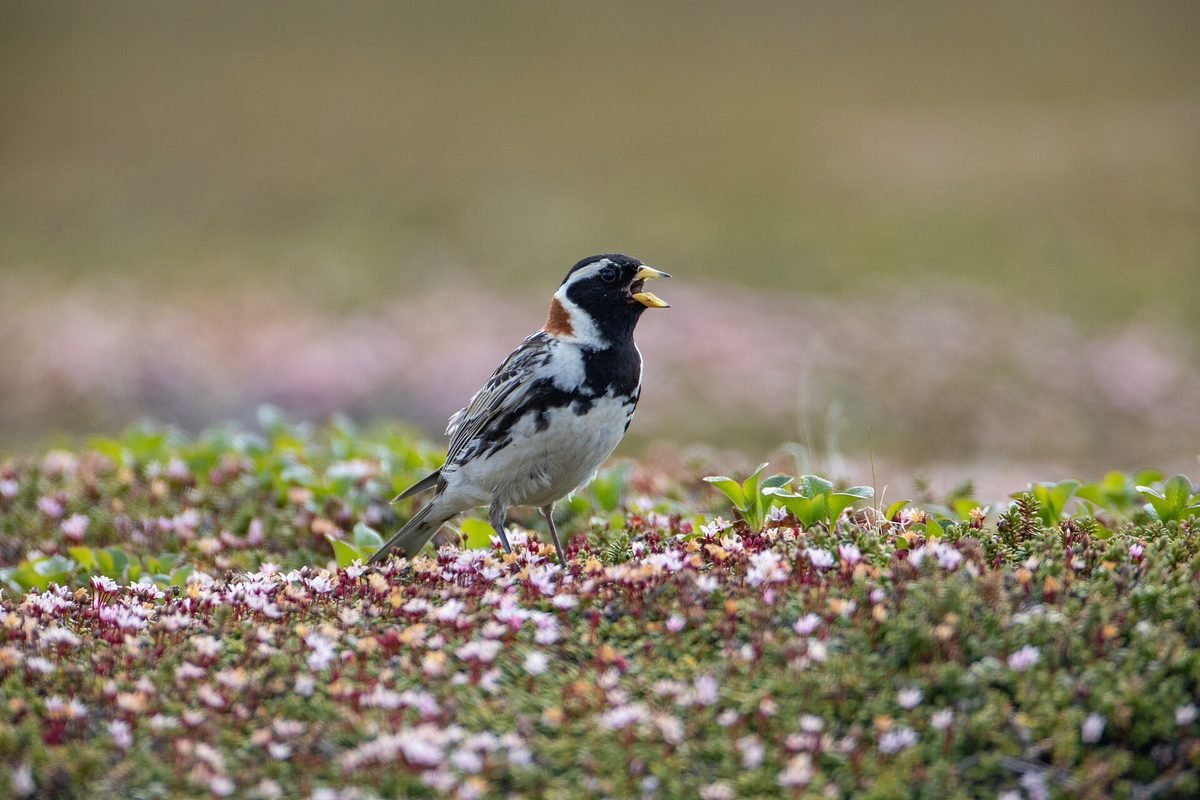
Many birds are heard long before they are seen, hidden among leaves or singing from a high branch at dawn. Learning bird song opens up a whole new way of identifying birds, because each species has its own pattern of notes, its own rhythm and its own pitch. You do not need a perfect ear to begin, only patience, regular listening and a few simple ways of describing what you hear.
Start with the common birds near your home, and learn one song at a time. Listen in the same garden or park each morning, notice which song repeats from the same tree, and compare the sound with a photo or description of the bird. Over a few weeks the songs will stop sounding alike, and you will begin to name birds by ear before you ever see them.
What to Listen for in a Bird Song
Pitch is the first thing to notice: is the song high and thin, or low and rich? A goldcrest sings very high, almost at the edge of hearing, while a blackbird sings lower, flute-like notes that carry across a garden. Pitch alone will not name a bird, but it narrows the list quickly, and it helps to describe a song in words, such as high, low, squeaky or mellow, so you can remember it later.
Rhythm and pattern come next. Some songs are a short burst of notes repeated again and again, like the chiffchaff saying its own name, while others are long, varied phrases with pauses, like the song thrush repeating each phrase two or three times. Count the notes, notice where the pauses fall, and ask whether the song rises, falls or stays level. A steady pattern is much easier to learn than a jumble of notes.
Habitat and season give the song its context. A reed warbler sings from reeds beside water, a skylark sings high over open fields, and a robin sings through autumn and winter when most other birds are quiet. The time of day matters too: the dawn chorus in spring is the busiest time, when males sing to defend a territory and attract a mate. Note the place, the month and the hour beside every song you learn.
How to Identify It Step by Step
- Go out early in the morning in spring, when birds sing most, and stand still in one place so the songs come to you.
- Pick one song, listen to it for a full minute, and note its pitch, speed and whether the notes repeat or change.
- Describe the song in your own words, such as fast and squeaky, or slow and flute-like, and write the words down.
- Watch the singer if you can, and note its size, colour, beak shape and the branch or bush it sings from.
- Check your guess against a bird song recording or a photo guide, then listen again the next day to fix the song in memory.
Common Bird Songs to Learn First
- Blackbird: A rich, flute-like song of varied phrases, sung from a rooftop or tall tree, often in the early morning and evening.
- Robin: A thin, sweet, warbling song with pauses, heard all year, even in winter, from a low branch or garden fence.
- Chiffchaff: A simple two-note song, chiff-chaff, chiff-chaff, repeated steadily from trees and bushes in spring and summer.
- Song thrush: Loud, clear phrases, each repeated two or three times, sung from a high perch in gardens and woodland edges.
- Wren: A very loud, fast burst of trilling notes for such a small brown bird, often sung from a hedge or log pile.
Common Mistakes to Avoid
- Learning too many songs at once. Start with three or four common birds and add new ones only when those feel familiar.
- Listening only once and guessing. Songs vary between birds, so hear the same song on several days before you trust the identification.
- Forgetting the habitat. A song that fits a woodland bird is unlikely beside a reed bed, so always note where you heard it.
- Assuming every sound is a song. Alarm calls, contact calls and the sounds of young birds are different, and they do not identify a species by song alone.
Practising Bird Song Through the Year
Bird song changes with the seasons, and spring is the best time to learn. From March to June, males sing strongly to hold a territory, and the dawn chorus can include twenty species in one garden. By late summer the singing fades as birds moult and feed their young, and in autumn only a few, like the robin, keep singing. Winter is quiet, but it is a good time to revise the songs you learned and to listen for the thin calls of winter visitors.
Practise little and often rather than in one long session. Ten minutes each morning in the same place will teach you more than a whole day spent once a month, because repetition fixes a song in memory. Keep a simple notebook with the date, the place and your own words for each song, and record short clips on your phone when you can, so you can compare them with a guide at home.
Frequently Asked Questions
How long does it take to learn bird songs?
Most beginners can name five common songs within a few weeks of listening for ten minutes a day in spring, when birds sing most.
Can I identify a bird from its song alone?
Often yes, when the song is clear and distinctive, but always check the habitat, season and, if possible, a sighting before you are certain.
What is the dawn chorus?
The dawn chorus is the burst of bird song just before and after sunrise in spring, when many males sing together to defend territories.
Do female birds sing too?
In many species only the male sings the full song, but in some, such as the robin, females also sing, and both sexes use shorter calls.
Try it yourself: upload a photo to the Tree Identifier and see the identification with full details on this site. Read also: How to Identify Birds by Photo.
Bird song identification grows with practice, not talent. Learn a few common songs, note pitch, rhythm and habitat, listen in the same place each day, and the birds you once only heard will become birds you can name with confidence.