
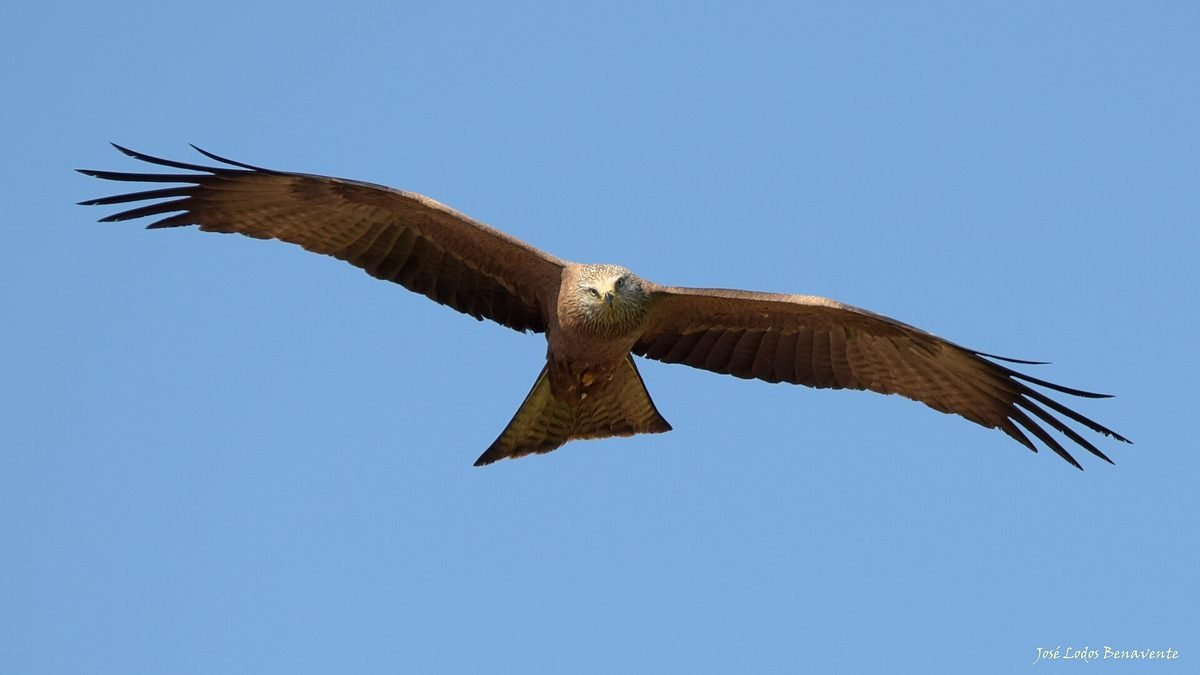
A bird of prey high in the sky can look like a small dark shape, yet its silhouette tells a story. Wing shape, tail length, the way it holds its wings and the rhythm of its flight are often clearer than colour or plumage, which fade with distance. Learning to read those silhouettes is the key to identifying raptors, and it is a skill that grows quickly with practice.
Start with the common species in your area and learn their shapes one at a time. A buzzard soars in wide circles on broad wings, a red kite glides with a forked tail, and a kestrel hovers in one spot over a field. Watch for a minute, note the shape and the flight, and compare what you saw with a guide when you get home.
Flight Features to Check on a Raptor
Wing shape is the most useful field mark in flight. A buzzard has broad, rounded wings with splayed primary feathers that look like fingers at the tips, while a sparrowhawk has shorter, broader wings built for fast turns among trees. A red kite has long, angled wings that bend back at the wrist, and a kestrel has narrow, pointed wings that beat quickly. Sketch the shape in your mind, or in a notebook, and it will stick.
Tail shape comes next and is often visible even when the bird is high. The red kite has a deeply forked tail that twists as it steers, the buzzard has a short, broad, fan-shaped tail, and the kestrel has a long tail that it spreads when hovering. A marsh harrier holds its wings in a shallow V and has a long tail, while a sparrowhawk has a long, straight-edged tail with bars. Tail plus wings will separate most common raptors.
Flight style and habitat complete the picture. Buzzards soar for long periods on rising warm air, kestrels hover over grassland and roadside verges, sparrowhawks dash low along hedges, and red kites glide and twist over farmland and valleys. Note the height, the speed, whether the bird flaps or glides, and the habitat below, because a raptor hunting over a reed bed is unlikely to be the same species as one circling over a wood.
How to Identify It Step by Step
- Watch the bird for at least a minute and note whether it soars, glides, hovers or flaps in short bursts.
- Look at the wing shape: broad and rounded, long and angled, or narrow and pointed, with fingered tips or smooth edges.
- Check the tail: forked, fan-shaped, long and barred, or short and broad, and note how the bird steers with it.
- Note the size beside a familiar bird, the habitat below, and whether the bird is alone or in a group.
- Take a photo if you can, even a distant one, and compare wing, tail and flight style with a raptor guide at home.
Birds of Prey You May See in Flight
- Common buzzard: A medium raptor with broad wings, a short fan tail and a mewing call, often seen soaring in circles over fields and woods.
- Red kite: A large raptor with long angled wings and a deeply forked tail, gliding and twisting gracefully over farmland and valleys.
- Kestrel: A small falcon with pointed wings and a long tail, famous for hovering in one spot while it watches for voles below.
- Sparrowhawk: A fast, agile hunter with short broad wings and a long barred tail, dashing low along hedges after small birds.
- Marsh harrier: A large harrier with long wings held in a shallow V, hunting low over reed beds and wetlands with slow, steady beats.
Common Mistakes to Avoid
- Judging by size alone. A distant buzzard can look small and a close kestrel can look large, so always check wing and tail shape too.
- Calling every soaring raptor a buzzard. Red kites, eagles and harriers also soar, and the tail shape usually separates them quickly.
- Expecting bright colours at a distance. In the sky, raptors often look dark or pale against the light, and silhouette matters more than plumage.
- Forgetting the habitat. A harrier over reeds, a kestrel over a motorway verge and a sparrowhawk in a garden are clues, not coincidences.
Watching Raptors Safely and Ethically
The best raptor watching happens at a distance, with binoculars and patience. Find a hill, a coast path or a woodland edge with a wide view, and scan the sky slowly in the late morning, when warm air rises and raptors soar. Keep still and quiet, and let the birds come into view rather than chasing them. A good vantage point, visited often, will teach you more than a long walk spent looking down at your feet.
Always keep your distance from nests and roosts, and never disturb a bird of prey to get a closer view or a better photo. Raptors are sensitive while breeding, and a flushed bird may abandon a nest or leave its young exposed. If a bird changes its behaviour because of you, move away at once. Ethical watching protects the birds and keeps the site good for everyone who visits after you.
Frequently Asked Questions
What is the easiest bird of prey to identify in flight?
The red kite, with its deeply forked tail and long angled wings, is one of the easiest raptors to name in flight.
How can I tell a buzzard from a red kite?
A buzzard has broad wings and a short fan tail, while a kite has longer, angled wings and a deeply forked tail.
Why do raptors soar in circles?
They ride rising warm air, called thermals, to gain height without flapping, saving energy while they scan the ground below.
When is the best time to watch birds of prey?
Late morning is often best, when the sun warms the ground and thermals form, though kestrels and harriers hunt through the day.
Try it yourself: upload a photo to the Tree Identifier and see the identification with full details on this site. Read also: How to Identify Birds by Photo.
Raptor identification starts with the silhouette: wing shape, tail shape and flight style, checked against habitat. Learn the buzzard, kite and kestrel first, keep your distance, and the dark shapes circling overhead will soon have names.