
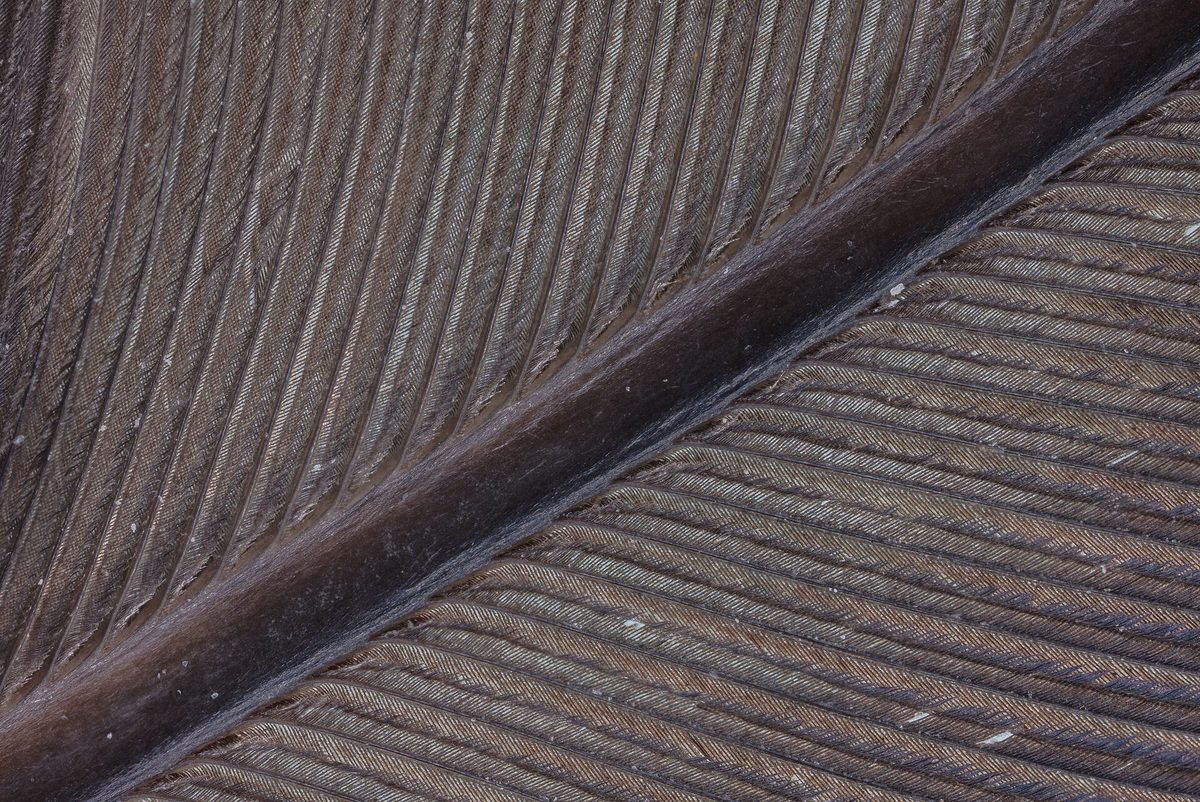
Birds often leave signs behind long after they have flown away: a feather caught on a fence, three-toed footprints in soft mud, a scattering of seed husks below a feeder. Learning to read those signs adds a new layer to birdwatching, because it tells you which birds visited a place even when you were not there. It is a quiet, detective-like skill, and it works in gardens, woods and on shores.
Feathers and tracks are best used as clues, not as proof on their own. A single feather can suggest a species, but colour, size, pattern and place must agree before you name it. This guide explains what to look for in a feather, how to read footprints, and the other signs, such as pellets and droppings, that birds leave behind.
What to Check on a Feather or Track
A feather tells you most from its size, shape and pattern. Wing feathers are long and stiff with a curved vane, tail feathers are long and straight, and body feathers are soft and fluffy. Note the length, the colours, any bars, spots or edges, and where you found it. A blue jay feather is blue with black bars, a woodpecker feather may be black and white, and a mallard feather is brown and mottled. Size alone can rule out many species at once.
Bird tracks are mostly three toes pointing forward, with a fourth toe behind that often does not show. Note the size of the print, the length of the toes, whether the toes are joined by webbing, and the stride between prints. A heron leaves a large, long-toed print in mud, a duck leaves a webbed print, and a small songbird leaves a tiny hopping pattern with both feet together. Wet mud, sand and snow hold prints best.
Other signs fill in the story. Owls and raptors leave pellets of fur and bone below a roost, woodpeckers leave holes and wood chips, and seed husks below a feeder show which birds fed there. Droppings can also hint at a species, though they are hard to use alone. Put the signs together — a feather, a track and a pellet in the same wood — and the picture becomes much stronger than any one sign alone.
How to Identify It Step by Step
- Photograph the feather or track where you found it, with a coin or your hand beside it for scale, before you touch it.
- Note the size, colour and pattern of the feather, or the size, toe count and webbing of the track, and the habitat.
- Check whether the track shows walking, with one foot after the other, or hopping, with both feet landing together.
- Look for other signs nearby, such as pellets, droppings, seed husks or feeding holes, that point to the same bird.
- Compare your notes and photo with a feather or track guide, and name the bird only when size, pattern and place agree.
Feathers and Tracks You May Find
- Blue jay feather: A bright blue wing feather with black bars and a white tip, often found below trees where jays feed and call.
- Woodpecker feather: A black and white feather, sometimes with red, dropped near a tree where a woodpecker has been drumming.
- Mallard feather: A soft brown mottled body feather, or a curled drake feather, found beside ponds, lakes and rivers.
- Heron track: A large three-toed print with long thin toes in soft mud at the edge of a lake, river or estuary.
- Songbird track: A tiny pair of prints side by side in snow or mud, showing the hopping gait of a robin, sparrow or tit.
Common Mistakes to Avoid
- Naming a bird from one feather alone. Feathers vary within a species, and colour can fade, so always check size and place too.
- Forgetting to add scale to a photo. Without a coin or a hand beside it, a feather or track photo gives no clue to its real size.
- Handling feathers without care. In some countries it is illegal to keep feathers of wild birds, so photograph them and leave them where they are.
- Reading a single print as a track. One print can mislead, so follow the trail and look at the pattern of several prints together.
Feathers, Tracks and the Law
In many countries, including the United States, it is illegal to collect or keep the feathers of most wild birds, even feathers found on the ground, because the law protects birds from hunting and trade. The best practice everywhere is to photograph a feather, note where you found it, and leave it in place. That way you keep a record for identification without breaking the law or removing a sign that another watcher might enjoy.
Tracks need no such caution, and they are a good winter skill. After snow or rain, soft ground holds prints clearly, and a morning walk can reveal a whole night of bird activity: where a heron waded, where a flock of ducks landed, where a robin hopped along a path. Go out early before other walkers spoil the prints, and carry a small ruler or a coin so every photo has a scale.
Frequently Asked Questions
Can I identify a bird from a single feather?
Sometimes, when the feather is distinctive, but it is safer to use size, colour, pattern and the place where you found it together.
What do bird tracks look like?
Most birds leave three toes pointing forward, sometimes with a hind toe, and ducks and swans show webbing between the toes.
Is it legal to keep a feather I find?
In many countries, including the United States, it is illegal to keep feathers of most wild birds, so photograph them and leave them.
Where is the best place to find bird tracks?
Soft mud, wet sand and fresh snow hold prints best, especially at lake edges, river banks, estuaries and garden paths after rain.
Try it yourself: upload a photo to the Tree Identifier and see the identification with full details on this site. Read also: How to Identify Birds by Photo.
Feathers and tracks let you read a place like a story: size, colour and pattern for a feather, toe count, webbing and gait for a track. Photograph with a scale, check the habitat, leave feathers where you found them, and the signs will name birds you never saw.