
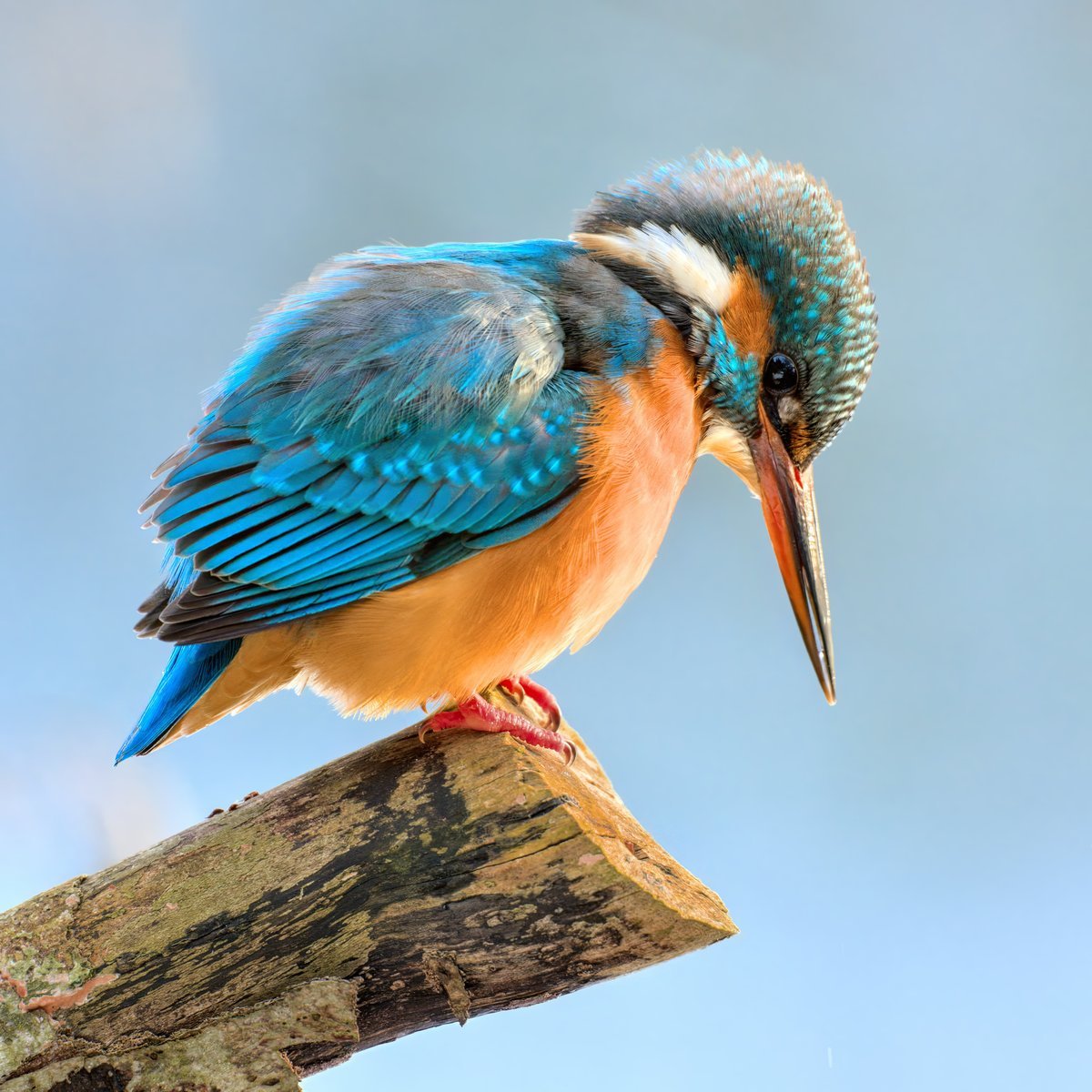
There are few more thrilling moments in birdwatching than the first flash of a kingfisher: a streak of electric blue skimming low over the water, gone before you can raise your binoculars. The common kingfisher, Alcedo atthis, is a small bird with outsized colour, and it lives along slow-moving rivers, streams, ponds and lakes across Europe, Asia and North Africa.
Kingfishers are often heard before they are seen, and they spend long periods sitting quietly on a low perch, watching the water. This guide will help you identify them by colour, call, flight and habitat, and show you how to tell them apart from the few birds that might cause confusion.
Colour: A Jewel in Two Tones
The common kingfisher is unmistakable when seen well. The upperparts are a brilliant, almost metallic blue and green, while the underparts are a warm orange. The head carries a long, dagger-like black bill, a white patch on the neck, and a blue crown. Males and females look very similar, though the female usually has a reddish lower bill, which is one of the few ways to tell them apart.
Be aware that the blue can look very different in different light. In bright sunshine the back shines vivid turquoise, while in shade it can look dark blue or even green. The orange underparts are the most constant feature, and a flash of orange low over the water is often the first sign. Young kingfishers are duller than adults, with a darker bill, but the blue and orange pattern is already clear.
Call: The Sound That Gives Them Away
Most kingfisher sightings begin with the call. It is a high, sharp, shrill whistle, often written as peee-ke-ke, given in flight and sometimes from a perch. It is loud for such a small bird, and it carries well across water. Once you learn it, you will hear kingfishers you would otherwise have walked straight past.
The call is the best early warning system a kingfisher watcher has. When you hear that sharp whistle, stop, look low over the water, and scan the near bank for a small bird on a low branch or post. Kingfishers often call as they fly, so the sound usually means a bird is moving along the river.
Habitat and Behaviour
Kingfishers need clear, slow-moving water with small fish, and a low perch from which to hunt. Rivers, streams, canals, ponds, lakes and even flooded gravel pits can all hold kingfishers, provided there are overhanging branches, reeds or posts to sit on. They are territorial birds, and a single bird or pair may patrol a stretch of river through the whole year.
The hunting method is the classic kingfisher picture: the bird sits still on a low perch, head cocked, watching the water below. When it spots a small fish, it dives headfirst with a splash, catches the fish in its bill, and returns to the perch to swallow it headfirst. They also nest in burrows dug into steep, sandy riverbanks, which is another reason they favour quiet, undisturbed stretches of water.
How to Spot a Kingfisher in 5 Steps
Kingfishers reward patience more than speed. Use these steps on your next riverside walk.
- Choose the right place. Pick a slow river, stream or pond with clear water, overhanging branches and low perches near the bank.
- Listen first. Stand quietly and listen for the sharp, high peee-ke-ke call. If you hear it, a kingfisher is moving nearby.
- Scan low over the water. Watch for a fast, low, straight flight, a flash of blue and orange just above the surface.
- Check the perches. Look at low branches, posts and reeds along the bank. A sitting kingfisher is small, upright and very still.
- Be patient and still. Sit quietly for ten minutes. Kingfishers often return to favourite perches, and stillness is your best tool. Bring the tree identifier tool too, and learn the riverside trees while you wait.
Quick Clues Checklist
- Brilliant blue upperparts and warm orange underparts.
- Long, dagger-like bill and short tail.
- High, shrill peee-ke-ke call given in flight.
- Fast, low, straight flight just above the water.
- Low perch over clear, slow water with small fish.
- Upright, motionless hunting posture on a branch or post.
Common Mistakes to Avoid
- Confusing kingfishers with other blue birds. Blue tits and jays are blue, but they are woodland and garden birds, not waterside hunters, and they lack the orange underparts and the long bill.
- Looking too high. Kingfishers fly and perch low, often below head height, so scan the water surface and the low bank, not the treetops.
- Moving too fast. Kingfishers are shy and flush easily. Walk slowly, stop often, and sit still when you reach a good spot.
- Expecting them on every river. They need clear water and small fish, so polluted or fast, muddy rivers may hold none at all.
- Disturbing a nest bank. Never approach a sandy riverbank where kingfishers may be nesting, and keep dogs away from the water's edge in the breeding season.
Frequently Asked Questions
What does a kingfisher eat?
Mostly small fish, caught by diving from a low perch. Kingfishers also take small water insects and tadpoles when fish are scarce, and they swallow their prey whole, headfirst.
How can I tell a male kingfisher from a female?
They look very similar. The best clue is the bill: the female usually has a reddish or orange lower bill, while the male's bill is all black. This is not always easy to see in the field.
When is the best time to see a kingfisher?
Early morning and late afternoon are often best, when the birds are actively hunting and the light is low. Winter can also be good, because the birds are easier to spot on bare branches.
Do kingfishers migrate?
It varies by region. In mild areas they stay all year, while birds from colder northern regions may move south in winter when rivers freeze and fishing becomes impossible.
A kingfisher sighting is a small reward for patience, and it never loses its magic. Learn the call, choose a quiet stretch of clear water, and give yourself time to sit and watch. While you wait, learn the riverside trees with our guide to identifying a tree by its leaves and the tree identifier tool.
Featured image: Wikimedia Commons (CC / public domain).