
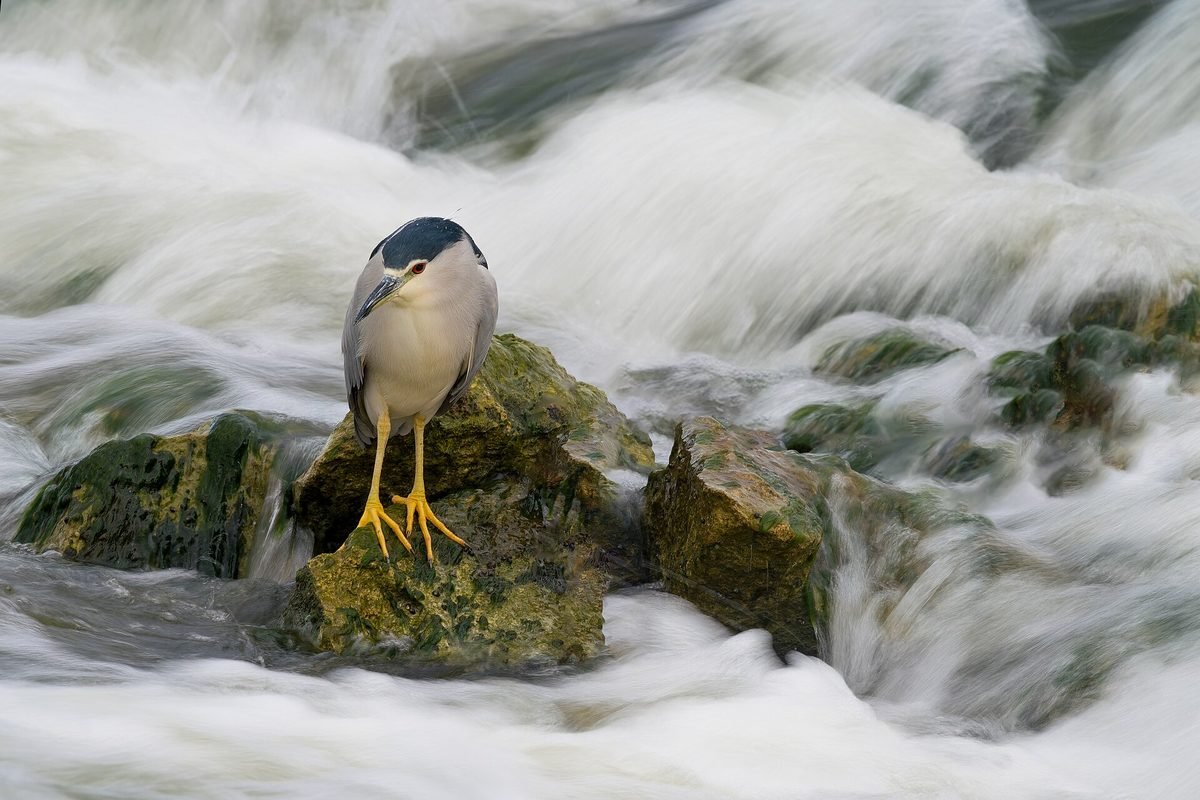
Lakes, rivers, estuaries and coasts hold some of the easiest birds to identify, because waterbirds are often large, still and out in the open. A heron standing motionless at the edge of a pond, a mallard dabbling in the shallows, or a swan gliding across a lake can be watched for minutes at a time. That calm, open view makes waterbirds a perfect next step after garden birds.
Waterbird identification rests on a few clear features: bill shape, neck length, leg colour, body shape and behaviour. A duck has a flat bill for sifting food, a heron has a dagger bill for spearing fish, and a swan has a long neck for reaching plants below the surface. This guide explains those marks and the common species to expect beside water.
Waterbird Field Marks to Check
Bill shape is the best first clue beside water. Dabbling ducks, like the mallard, have a broad flat bill for filtering food from the surface, while diving ducks have a narrower bill for catching food underwater. Herons and egrets have a long, sharp, dagger-like bill for spearing fish, and waders have bills of many lengths for probing mud. Look at the bill first, and the bird will often name itself.
Neck and legs come next. A grey heron has a long neck that folds into an S shape in flight and long dark legs for wading, a mute swan has a long curved neck held in an S, and a coot has a short neck and lobed toes for swimming. Leg colour helps too: a little egret has black legs with yellow feet, while a grey heron has brownish legs. Long legs mean a wader, short legs mean a swimmer.
Behaviour and habitat complete the picture. Dabbling ducks tip up, tail in the air, to feed in shallow water, while diving ducks disappear underwater for seconds at a time. Herons stand still for minutes, then strike fast at a fish, and swans and geese graze on grass beside the water. Note whether the bird is on open water, at the muddy edge or in reeds, because each species has its own place.
How to Identify It Step by Step
- Look at the bill first: broad and flat, long and sharp, short and pointed, or long and downcurved for probing mud.
- Note the neck and legs: long or short, the colour of the legs, and whether the bird wades, swims or walks on mud.
- Check the body shape and size beside a familiar bird, such as a mallard, and note the colour pattern on the head and wings.
- Watch how it feeds: dabbling, diving, standing still to strike, or probing the mud with a steady rhythm.
- Take a photo and compare bill, neck, legs and behaviour with a waterbird guide, checking the habitat and the season too.
Waterbirds You Will Meet First
- Mallard: The familiar duck: the male has a green head, yellow bill and curled tail feathers, the female is mottled brown.
- Grey heron: A tall grey bird with a white head, black eyebrow stripe and dagger bill, standing still at the water edge.
- Mute swan: A large white swan with an orange bill and black knob, holding its neck in an S curve as it glides.
- Coot: A black waterbird with a white shield on its forehead, bobbing its head as it swims and diving for food.
- Little egret: A small white heron with a black bill, black legs and yellow feet, often seen wading in shallow water.
Common Mistakes to Avoid
- Calling every brown duck a female mallard. Female teal, gadwall and shoveler are also brown, but their bill shape and size differ clearly.
- Expecting a heron to look grey in all light. In low sun a heron can look dark, so check the neck shape, bill and long legs too.
- Forgetting that ducks change plumage. Male ducks in summer moult into a dull eclipse plumage that looks much like the female.
- Identifying from a single distant view. Waterbirds often need a second look at the bill or the legs, so wait until the bird turns.
Waterbirds Through the Seasons
Waterbirds change with the seasons more than garden birds do. In winter, lakes and estuaries fill with visiting ducks, geese and waders from the north, and a familiar lake can hold twice as many species as it does in summer. In spring, herons and ducks nest in reeds and on islands, and summer brings ducklings and cygnets that follow their parents in neat lines across the water.
Visit the same water through the year and you will see that cycle clearly. Note the first returning swallows over the water in spring, the waders on the mud in autumn, and the flocks of winter ducks that arrive as the days shorten. Keep your distance from nests and from birds with young, and watch from a hide or a path, so the birds feed and rest undisturbed.
Frequently Asked Questions
How do I tell a duck from a goose or a swan?
Ducks are smaller with shorter necks, geese are larger with longer necks and graze on grass, and swans are the largest with very long necks.
What is the difference between a heron and an egret?
Herons are larger and grey, while egrets are smaller and white; both have dagger bills, but egrets often have black legs with yellow feet.
Why do some ducks dive and others dabble?
Diving ducks feed underwater on plants and small animals, while dabbling ducks feed at the surface and tip up to reach food below.
Where is the best place to watch waterbirds?
A lake, reservoir, estuary or coastal mudflat with a hide or a quiet path gives the closest, calmest views without disturbing the birds.
Try it yourself: upload a photo to the Tree Identifier and see the identification with full details on this site. Read also: How to Identify Birds by Photo.
Waterbirds reward slow, patient watching: bill shape, neck and legs, then behaviour and habitat. Learn the mallard, heron, swan and coot first, and the birds of every lake, river and coast will start to fall into place.